Books have been written about the symbolism of bald heads, court fools and jesters, jesters who were entertainers
and minstrels
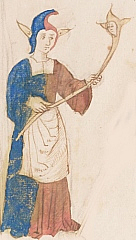
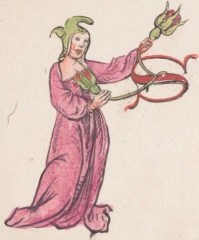
and the significance of asses ears on hoods. Most fools and jesters were men. I have included the few
women jesters from the
internet for balance.
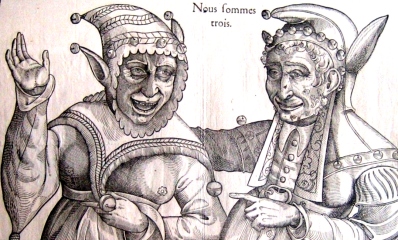
Foolishness is symbolized by the jester. Fools were thought of as low status, untrustworthy, clumsy and stupid..
A
long
European tradition of satirical works on fools goes back to the twelfth century, and the word fool had,
at the time, an underlying
Christian religious meaning of sinner, unbeliever, backslider.
“Christian writers often mention the jesters and their spectacles as examples of moral perversion. Because the entertainers
incite to worldly pleasures and sensual joys, they are considered accomplices of evil forces....The 13th century preacher
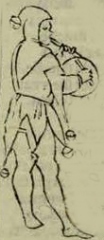
Bertold from Ratisbon defined the jester in a figurative metaphor as ‘devil’s bagpipes’ “ The root of the word "fool" is
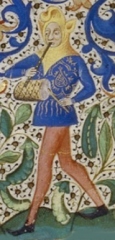
from the Latin follis, which means "bag of wind" or that which contains air or breath. So sometimes in images the fool
is playing
a bagpipe."
“In medieval iconography the ape is …often employed in the place of entertainers, … just as this animal imitates
everything without understanding the meaning of anything, jesters and popular players do not know the laws
of music and make themselves ridiculous.”
‘The Parody of Musical Instruments in Medieval Iconography’ ’by Sandra.Pietrin, 2017
There
is some doubt as to whether English
fools
actually wore the
earred hoods, bells and parti-coloured clothes
or whether they were
used as symbols that
people would understand.
King's fools fell into one of two categories; those that were simple and needed looking after and the clever, witty
ones who lived
on their quips. There is evidence that the fool existed in medieval England in the surviving accounts
of Hirard, the jester for the Saxon
King Edmund Ironsides (c. 993 - 1016 referred to as a joculator) as well as Rahere,
jester to Henry I (c.1068 – 1135) and referred to as a minstrel. |
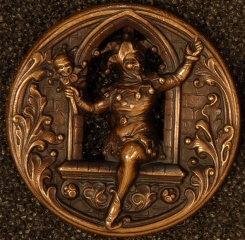 standard jester outfit on a button standard jester outfit on a button |
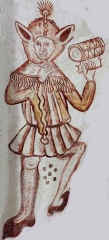
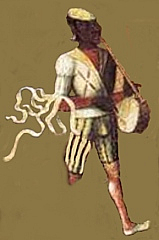
Jesters clothes were always showy, often out-of-date, whether expensive or cheap, inapprpriate to the scene they are depicted in. |
|
Crude and indecent behaviour was expected of fools.
Partial nudity was a clear sign of lunacy. |
|
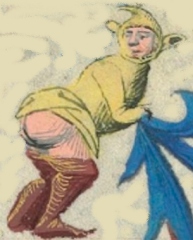 15th century, France 15th century, France |
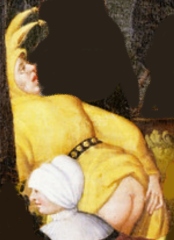 |
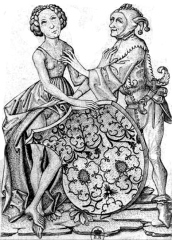 15th century 15th century |
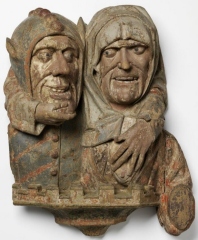 1520-1525 wood carving 1520-1525 wood carving |
| |
|
|
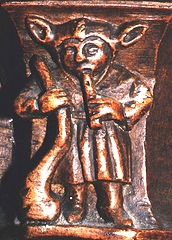 12th century misericord 12th century misericord
Alsace, France |
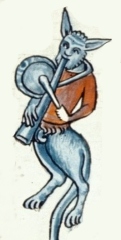 1275-1325 1275-1325
Toulouse, France |
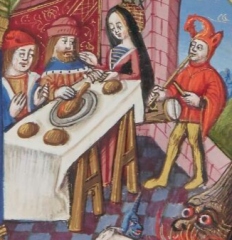 1345-1355 moral Bible, France 1345-1355 moral Bible, France |
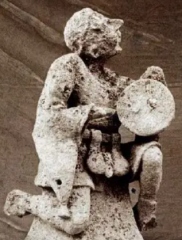 14th century Bohemia 14th century Bohemia
"bell attached
to his dress"
‘The Image of the Fool in Late Medieval Bohemia’ ,Umění/Art LXIV, 2016 |
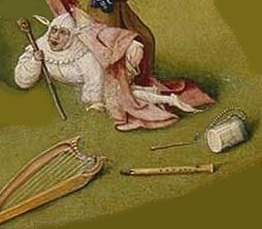
A closely-cropped head
was
a sign
of low birth
and considered to be ugly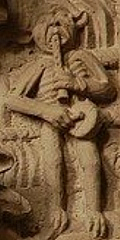 source source
|
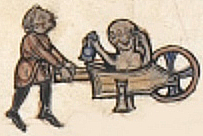 1250-1275 Oxford, England 1250-1275 Oxford, England
|
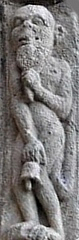 13th century frestel and bell 13th century frestel and bell
San Miguel de Estella,
Navarre,
Spain [fig 32] |
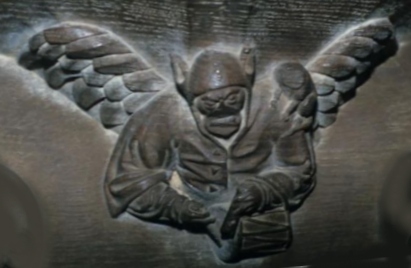 |
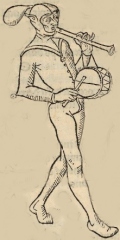
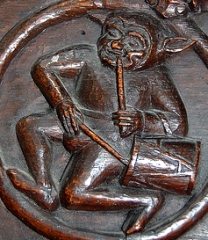
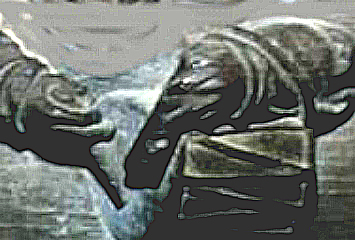 close-up of drumstick and pipe close-up of drumstick and pipe |
14th century angel/fool
church misericord, All Saints, Holdenby, Northampton, England |
|
|
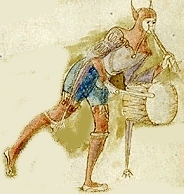
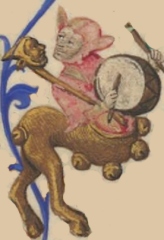
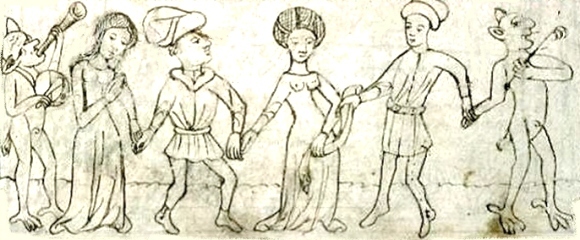 14th century France; [this may be a horn and tabor] 14th century France; [this may be a horn and tabor] |
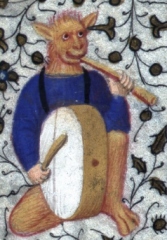 1420's France 1420's France
IMAGE CREDIT:
LEEDS
UNIVERSITY LIBRARY |
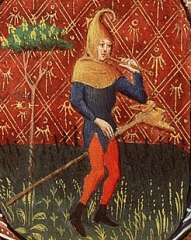 c 1430 Hague, Belgium c 1430 Hague, Belgium |
|
|
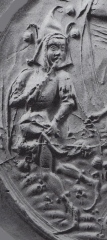 15th century Germany 15th century Germany |
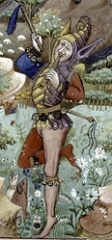 c.1450 England c.1450 England |
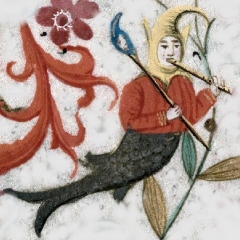 1450-1475 Troyes, France 1450-1475 Troyes, France |
|
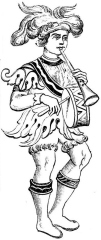 15th century France 15th century France
playing card 'buffoon' |
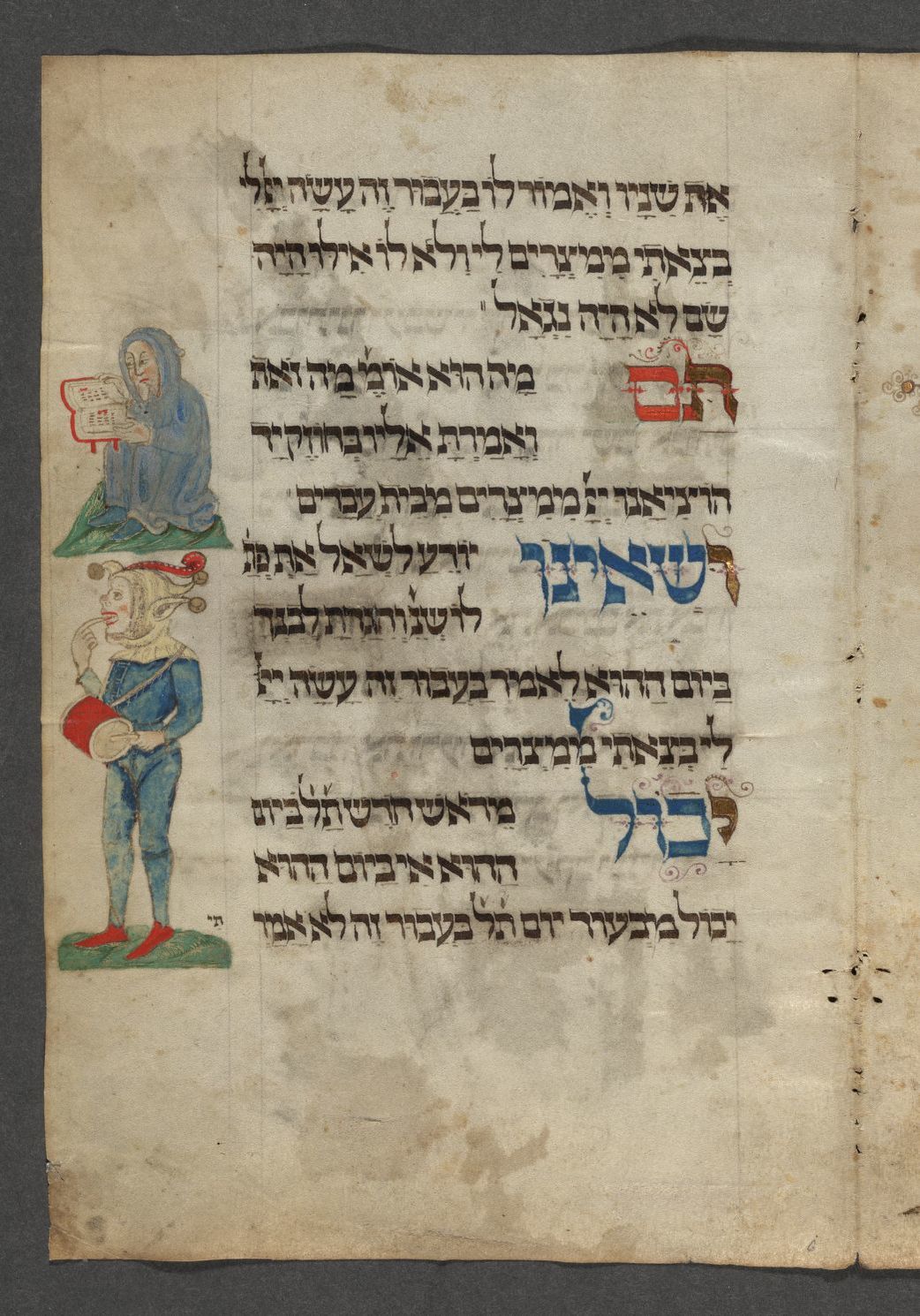
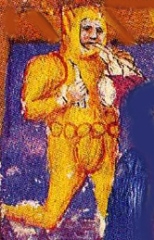 1457 the Book of Holidays 1457 the Book of Holidays
in Maimonides’ Mishneh Torah, Italy 85v |
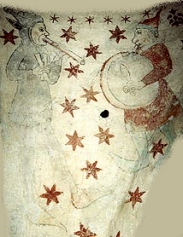 1464 Roskilde cathedral, Denmark 1464 Roskilde cathedral, Denmark
jester playing pipe and bones |
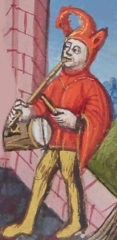 15th century France 15th century France |
|
One Tarot card character
is Death.
In the
Middle
Ages
Death is often
shown in Jester's
garb
because
"The last laugh
is reserved for
death."
Also, Death
humbles
everyone just
as jesters
make fun of
everyone
regardless
of their standing
in society. |
|
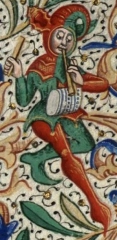 1450-1500 Rouen France 1450-1500 Rouen France |
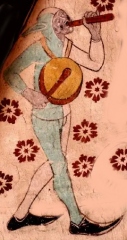 15th century Herkaberga Church 15th century Herkaberga Church
Sweden |
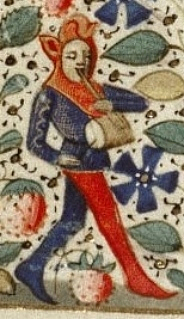 1460-70 Normandy,France 1460-70 Normandy,France
|
 1460 sitting on top of a carriage, Ashkenazi Hagadah, Germany
or northern Italy 1460 sitting on top of a carriage, Ashkenazi Hagadah, Germany
or northern Italy
‘Hebrew manuscripts : the power of script
and image’ by Tahan, Ilana, 2007 |
|
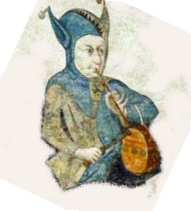 1464 Roskilde Cathedral, Denmark 1464 Roskilde Cathedral, Denmark |
|
|
|
1476 French pipe nad tabor player becomes a 'fool'  ‘Instrumentalists and Renaissance Culture, 1420-1600 : Players of Function and Fantasy’ by Victor Coelho and Keith Polk, page 226 ‘Instrumentalists and Renaissance Culture, 1420-1600 : Players of Function and Fantasy’ by Victor Coelho and Keith Polk, page 226 |
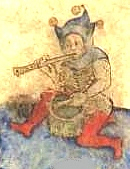 1479 sitting on top of a carriage 1479 sitting on top of a carriage |
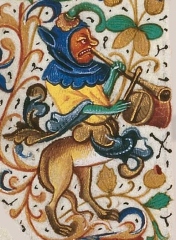 1470-1480 illustrating a present 1470-1480 illustrating a present
book
of Italian and French songs |
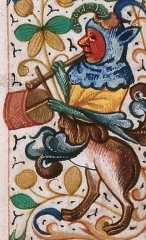 1470-1480 illustrating a present 1470-1480 illustrating a present
book
of Italian and French songs |
|
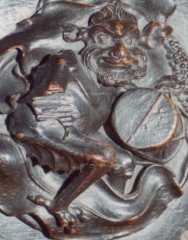 possible taborer, misericord possible taborer, misericord
[broken arm] |
|
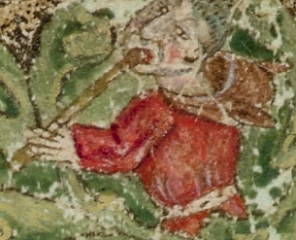 1471 jester's hood down, Germany 1471 jester's hood down, Germany |
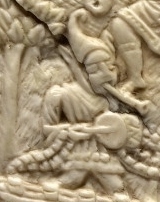 15th century mirror back, France 15th century mirror back, France |
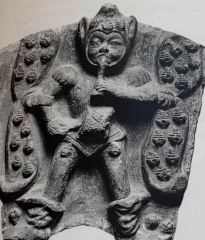 1440 Piedmont, Italy; details unknown 1440 Piedmont, Italy; details unknown
|
|
|
|
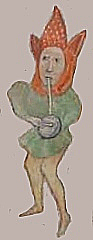 15th century country unknown 15th century country unknown |
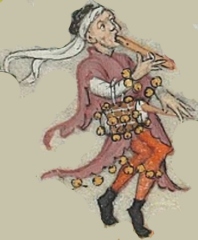 15th century manuscript France 15th century manuscript France
|
|
|
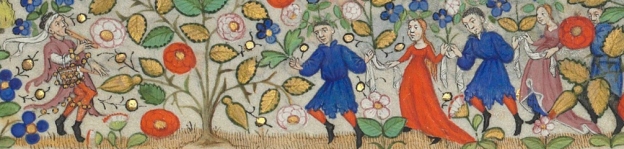 15th century manuscript taborer and dancers France 15th century manuscript taborer and dancers France
|
|
|
|
 |
 1480 Skivholme, Denmark 1480 Skivholme, Denmark |
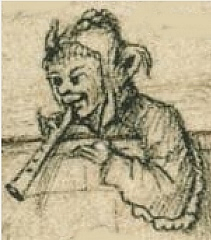 1480 house book from Wolfegg Castle, Germany 1480 house book from Wolfegg Castle, Germany |
| 1475-1480 Paris / the Loire region, France fol 7: close-up of jester in tree |
|
|
|
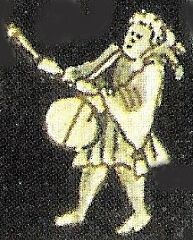 |
|
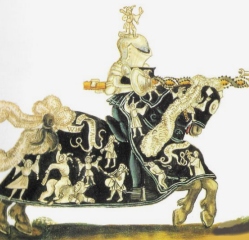
1542 Munich, Germany, possibly. Horse caparison covered with images of fools
doing foolish things; close-up of taboring fool.
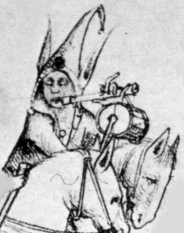
'The tournament opponents with lances
on opposite sides. On the horse's tournament
blanket depictions of fools, including one with
a one-handed flute and cylinder drum' |
|
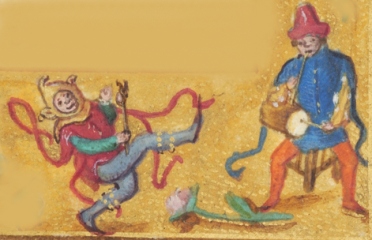 1520 Bruges, Belgium 1520 Bruges, Belgium |
|
1543 -1587 Germany
'a mounted jester with a
one-handed flute and drum' |
|
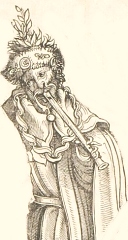
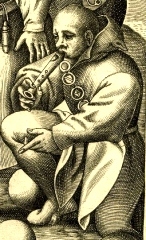 fool playing a pipe from fool playing a pipe from
'
Feast of Fools'
|
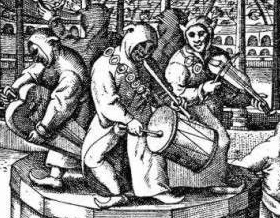
'Feast of Fools’ portrays a spectacular festival held in Antwerp, August 1561, although the festival began around 1200. The lower clergy and laity dressed up, ofen as donkeys/asses for the day.
In the original painting Brueghel interprets a play ‘Sotte Bollen’, performed at the festival. The Flemish word “sottebol” denotes a ballheaded fool: all the people are ballheaded, without hair. The Flemish association of ball-heads with foolishness is based on an old Flemish proverb, ‘His head turns foolish’. |
|
|
|
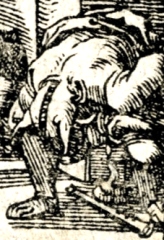 1572 edition of 'Ship of Fools'
[jester bent over pipe] 1572 edition of 'Ship of Fools'
[jester bent over pipe]
Basle, Switzerland |
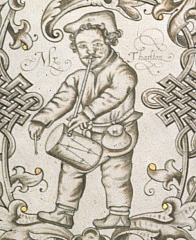 Richard Tarleton (died 1588) Richard Tarleton (died 1588)
Norwich, England |
|
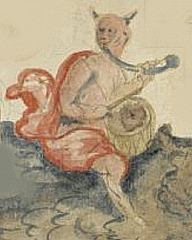 1685 jester playing horn and tabor in a parade, Spain 1685 jester playing horn and tabor in a parade, Spain |
|
|
| The symbolism of the jester
/ fool lingered into Victorian times. |
|
1833 story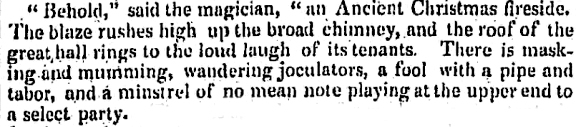 Bristol Mercury 28 December 1833 Bristol Mercury 28 December 1833
|
1841 dictionary definition:
“TABOR, a musical instrument in use among the Hebrews, Greeks, and Romans. To the rim were hung bells
and pieces of metal. In the Middle age it was a common instrument in the hands of fools ;
and children amused
themselves with little tabors.”
'A classical and archaeological dictionary of the manners, customs, laws, institutions, arts, etc. of the celebrated nations of Antiquity,
and of the Middle Ages [Texto impreso] : to which is prefixed a synoptical and chronological view of ancient history' |
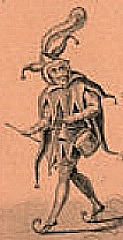 1835 ticket for York Music Festival,
Fancy Dress Ball 1835 ticket for York Music Festival,
Fancy Dress Ball
|
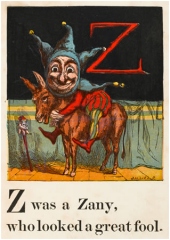 1867 children's book
Mary Evans Picture Library 1867 children's book
Mary Evans Picture Library |
In 2015, the town of Conwy
in north Wales appointed Russel Erwood
(aka Erwyd le Fol)
as the official
resident jester
of the town
and its people,
a post that had been
vacant since 1295. |
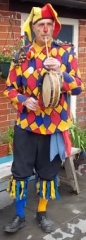 2023 Jester from 2023 Jester from
The Bourne River Morris Men
|
| |
|
| Elizabethan fools: |
"The vogue of the court fool seemed to have steadily
increased during the fourteenth
and to have culminated in the fifteenth and in the sixteenth century, when he became
a highly significant
figure not
only in social life, but still
more in art and literature..." |
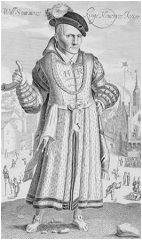 16th century Will Sommers 16th century Will Sommers
fool to Henry VIII
Mary Evans Picture Library |
Elizabethan fools wore feathers in their hats – residual
of the coxcomb. Feathers were fashionable at court,
but may also symbolise
a fool.
Shakespeare uses the term 'coxcomb' to mean a foolish
or vain person. |
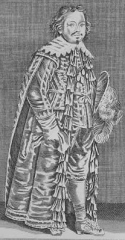 17th century 17th century
Archie, fool to 2 kings
Mary Evans Picture Library |
|
|
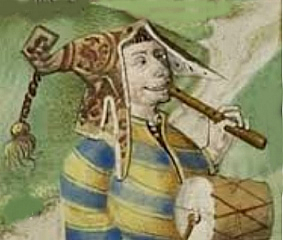
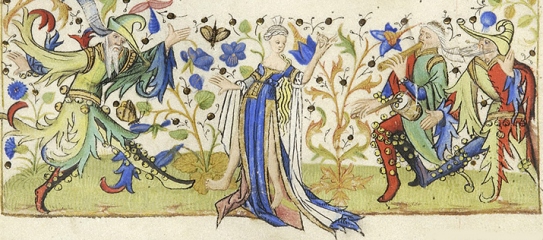 c.1440
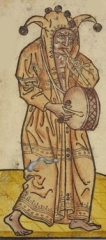
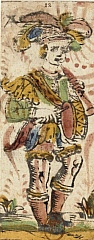
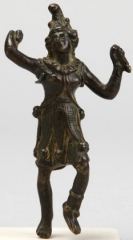 200AD female dancer
 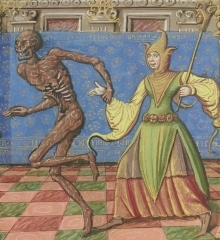 15th century woman jester
 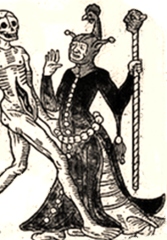 1491 Danse Macabre
  16th century Picardy, France
  16th century Picardy, France
 Maria Bárbola,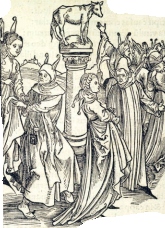




#/media/File:Groningen,_Martinikerk_plafondschildering_261_crop.jpg)


