Europe: west Spain
by Juanma Sanchez
Pipe and tabor music continues to be a living oral tradition throughout Spain, particularly along the border with Portugal.
“Taborers have always been solitary musicians, both because of the difficulty of agreeing ‘DULZAINA, GAITA AND FLUTE, THREE POPULAR INSTRUMENTS Brief introductory study to a collection of ‘New music for old instruments’ |
||||
Throughout the 16th and 17th centuries the drum and three-hole pipe formed an inseparable |
Different styles of instruments, techniques and music developed along the border with Portugal. As shepherds travelled along an ancient sheep-trail north/south cultural interchange occurred between Spanish provinces. These folklore traditions were well preserved as, up until the Spanish transition to democracy in the late 1970's, the west of Spain was largely rural. Even though the traditional music and song has now been written down and published over the last fifteen to twenty years the pipe and tabor is still generally learned 'by ear'.
These are the surviving pipe and tabor traditions starting geographically from the Bay of Biscay in the north, going southwards:
In the south-west of Asturias province the pipe is called a Xipla. It is used mainly for religious ritual dances which have elements similar to English morris dances. These are usually danced at the Pentecost Feast but nowadays this instrument is becoming less common.
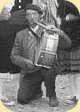
In Leon province, the pipe is called "Chiflo leonés" and with the tabor (tamborín) is played by the 'tamboriteros' at religious feasts (romerías), processions, weddings and other country celebrations. In some villages statues of pipe and tabor players have been set up in public places in recognition of their importance to the community. Recently a Folklore Academy has been set up to teach the instruments. There are two types of pipe, the Asturian Xipla and Chiflo, which are both Tone-Tone-Semitone and have the same origin.
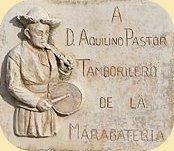
The music of Salamanca and Zamora provinces is similar to that of Extremadura due to the interchange of musical influences. In Zamora and Salamanca the "Gaita and Tamboril" are the main instruments used for folk music. In Extremadura the "Gaita y Tamboril" is played. video This Gaita is Semitone-Tone-Tone tuned. Local music schools now teach these instruments in the three provinces. In Aceituna a modern statue has been erected to a famous player.
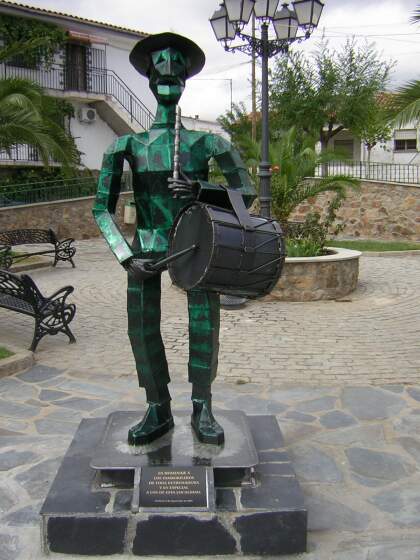
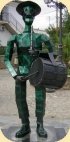
At the very south, in west Andalusia, a very important pipe and tabor tradition exists, the "gaita rociera". The instruments are played for religious occasions, the Rocío Romería, for processions, at feasts, for flamenco dancing, infact at all celebrations. The pipe is tuned Tone-Semitone-Tone and the tabor is large. There is a statue of a pipe and tabor player in El Rocío, in Andalusia. video
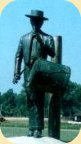
Gaita charra music.
.
top of page