Early texts were often copied and/or translated into another language in later years. The accompanying images
were usually modified in some way. This could have been because the earlier images were misunderstood
or they were re-interpreted
in the light of contemporary knowledge |
|
astrological treatise
'The Book of Astrology’ of George Zaparis Zothorus Fendulus
|
|
|
An early Persian language astrological treatise translated into Latin. Images were added to the text
by different illustrators in subsequent editions.
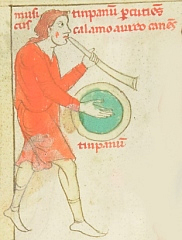
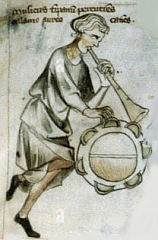
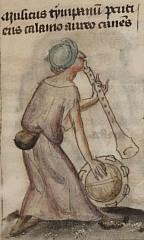
Gemini: The tabor gets jingles and a snare then becomes a mirror; the one-handed pipe turns into a two-handed windcap instrument.
The dog
remains a leaping dog.
|
|
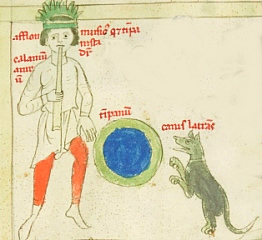 1220-1240 Italy (Sicily) image illustrating
a translated early Egyptian manuscript 12v |
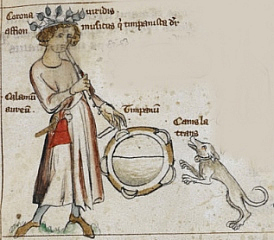 1350-1400 Burgundy or S. Netherlands f13 1350-1400 Burgundy or S. Netherlands f13 |
|
|
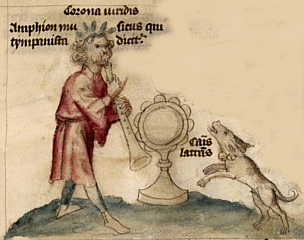 before 1403 Bruges, Belgium before 1403 Bruges, Belgium
‘The Book of Astrology’ of George Zaparis Zothorus Fendulus, Priest, Philosopher and Palatine;
compiled from Albumasar,
Alim the Syrian,
and Maymon the Caliph
|
|
|
|
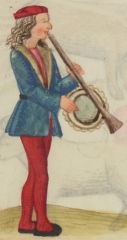
Virgo: The tabor with double snare changes over time: the jingles come and go. The pipe changes shape,
changes
the number of finger-holes and it's mouth-piece.
|
|
|
|
|
|
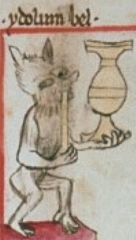
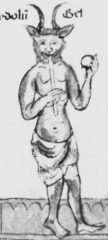
Greek god Bel
Images from 1360 to 1500 in editions of 'Speculum Humanae Salvationis'
|
|
|
|
Statues of the god Bel in a Greek apocryphal addition
to the book of Daniel,
reprinted
in many European editions.
Toward the end of the fifteenth century there was hardly a library in northern
Europe that did not possess an example.
Food (on animal bone) and drink, in a jug, of earlier editions
become bread
held in one
hand and a pipe with finger
-holes in the other. The pipe is played in the right hand
until
the Belgium
image of c.1500.
|
|
|
|
 1455 Bruges, Belgium 1455 Bruges, Belgium |
|
 1470's church fresco Uppland, Sweden 1470's church fresco Uppland, Sweden |
|
|
|
|
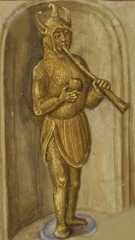 . 1500 Ghent or Bruges . 1500 Ghent or Bruges
Belgium 14v
|
|
|
|
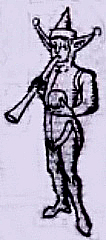
Bacchus, Roman god of wine, fertility, agriculture, and revelry
1531 - 1621 images of Baccus in
Andrea Alciato's Emblematum liber or Emblemata.
|
|
Originally published
in Italy this emblem book ran to over 100 editions
in
Germany, France,
the Spanish Netherlands and Italy.
It was
an essential work for every writer, artist and scholar
in post-medieval Europe. |
|
 1531 1531 original illustration, Augsburg |
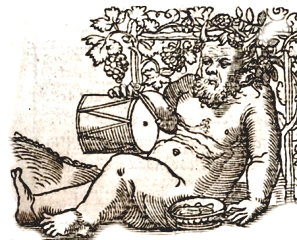 1534 Bacchus acquires a drum, Paris 1534 Bacchus acquires a drum, Paris |
|
 1548 1548 Bacchus playing the pipe and tabor
Lyons, France |
 1556 1556 added horns and man parts, hands reversed
Lyons, France |
|
 1567 1567 Franckfurt am Main, Germany |
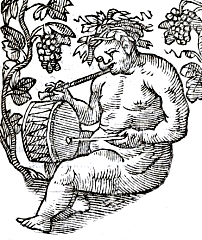 1584 Paris, France 1584 Paris, France |
|
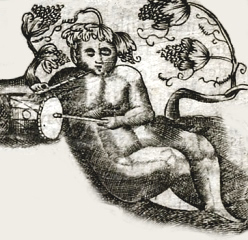 1615 1615 La Rioja, Spain |
 1621 1621 lost the pipe gained a drumstick
Padua, Italy |
|
|
|
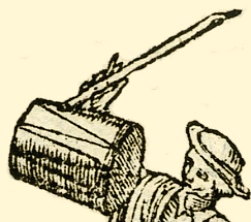
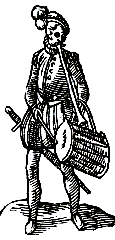
Cischas, a Bohemian military leader
in
Andrea Alciato's' Emblematum liber' or 'Emblemata'
Jan Ziska (c.1370-1425) is said to have ordered that his corpse be flayed and the skin made into a drum,
the sound of which would put the enemy to flight. ‘Terrifying even after death’
|
|
|
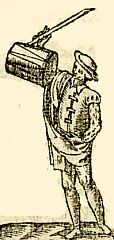 1551 fipple pipe; 1551 fipple pipe;
Lyons, France
|
 |
|
|
|
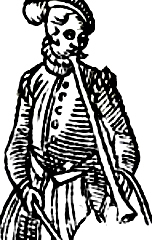 pipe with reed and flared end pipe with reed and flared end |
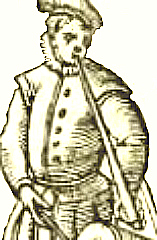 1621 pipe has lost the reed 1621 pipe has lost the reed
and the flared end; Padua, Italy |
|
|
|
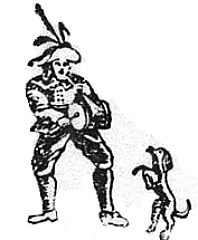
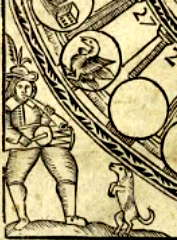
Not all images are greatly modified in subsequent editions. This game was often published in Belgium
but with connections
to the Netherlands. Each edition featuring the dancing dog has slight variations. |
|
|
|
 17th century, Belgium, the Goose Game with directions in Dutch and French 17th century, Belgium, the Goose Game with directions in Dutch and French |
|
|
|
|
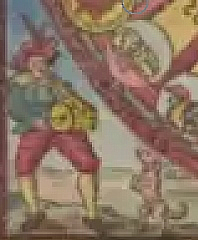 1650 woodblock used in 1713-17 1650 woodblock used in 1713-17 |
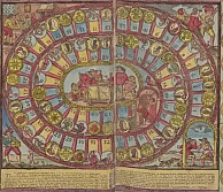 1650 board 1650 board |
|
|
|








 1584
1584