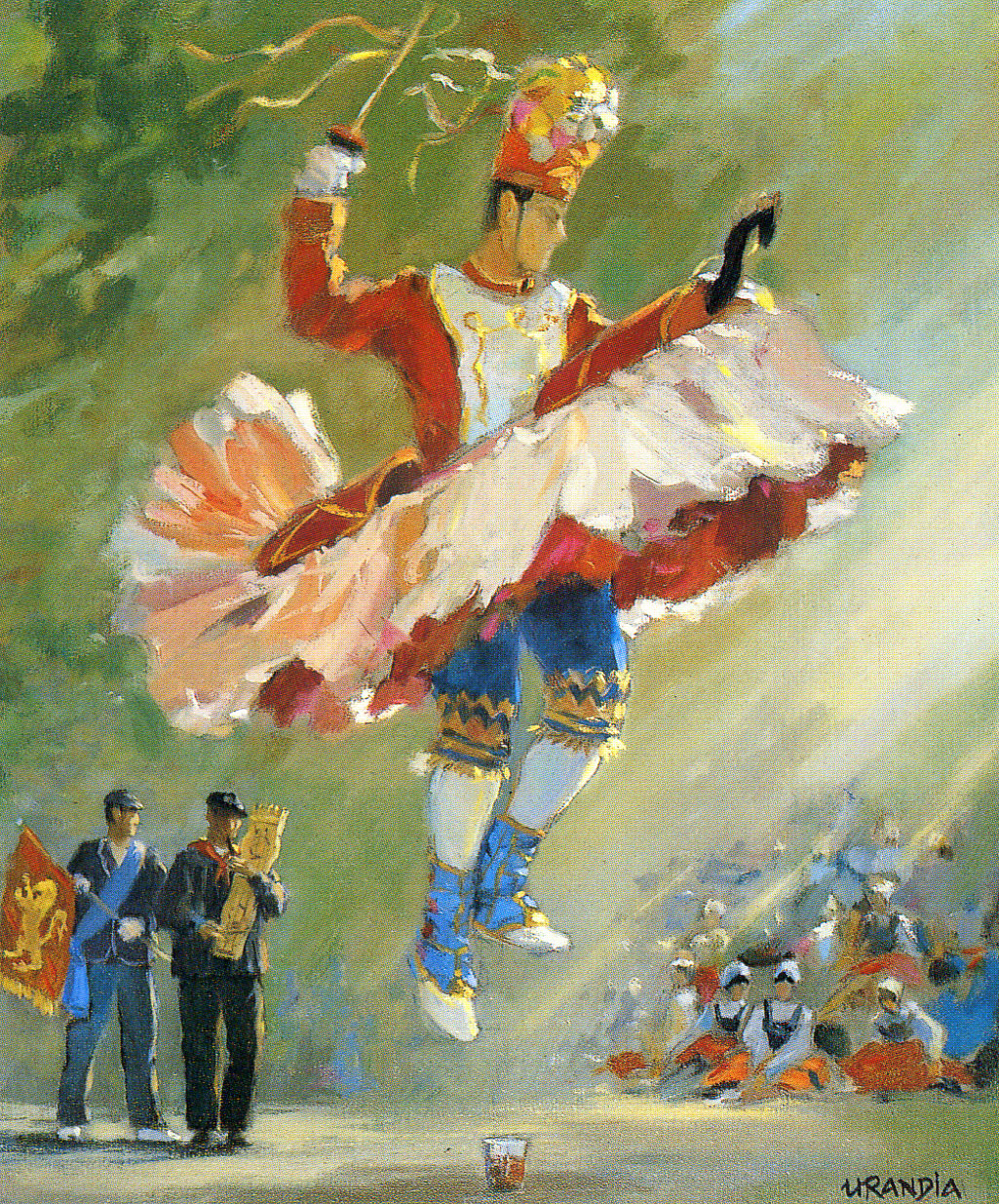
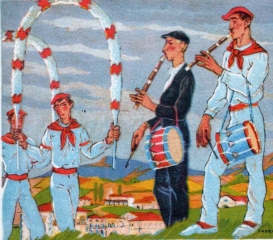
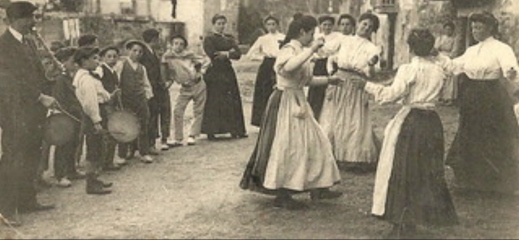
playing for dancing postcard playing for dancing postcard |
|
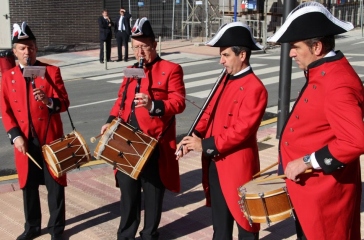
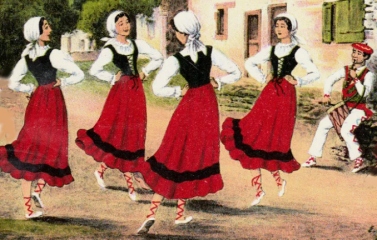 1980 French Basque postcard 1980 French Basque postcard |
|
|
 postcard [thanks Terry Carter] postcard [thanks Terry Carter] |
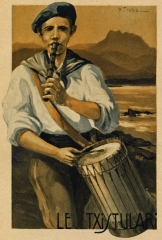
 Poster for teacher Poster for teacher |
| |
players
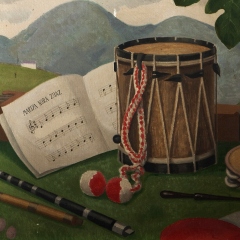
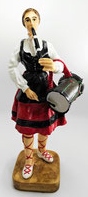
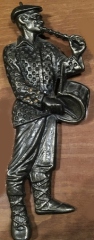
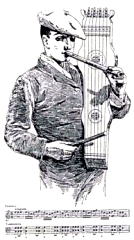
txistu (pipe)and tamboril (tabor) |
Nowadays, the txistu is made of ebony and grenadilla from Africa. Many old txistus tend to have a yellowish
colour, because this instrument was made of wood for years. Precisely to protect this cylindrical wooden tube,
it usually has metal rings. The mouthpiece is also made of metal. Txistu studies have become official
and today they are taught in most music schools.
A detailed history of the different pipes is here |
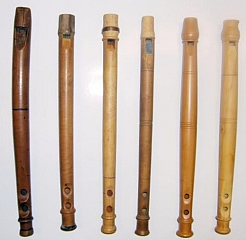 txirula - played in the French part of the Basque country txirula - played in the French part of the Basque country |
"the first txistulari hired in Bilbao are from the 15th century, we are very much alive today".
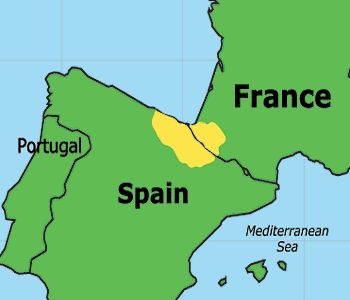
In all regions of the Basque Country, the presence of three-hole flutes has been very prominent for a long time,
with multiple names, materials, trends, styles and functions. 1
Formerly txistus were made of bone or wood, and although they can now be made of plastic or metal, it is more
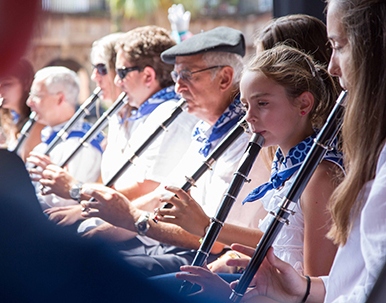
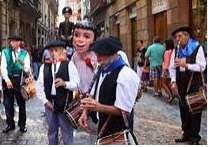
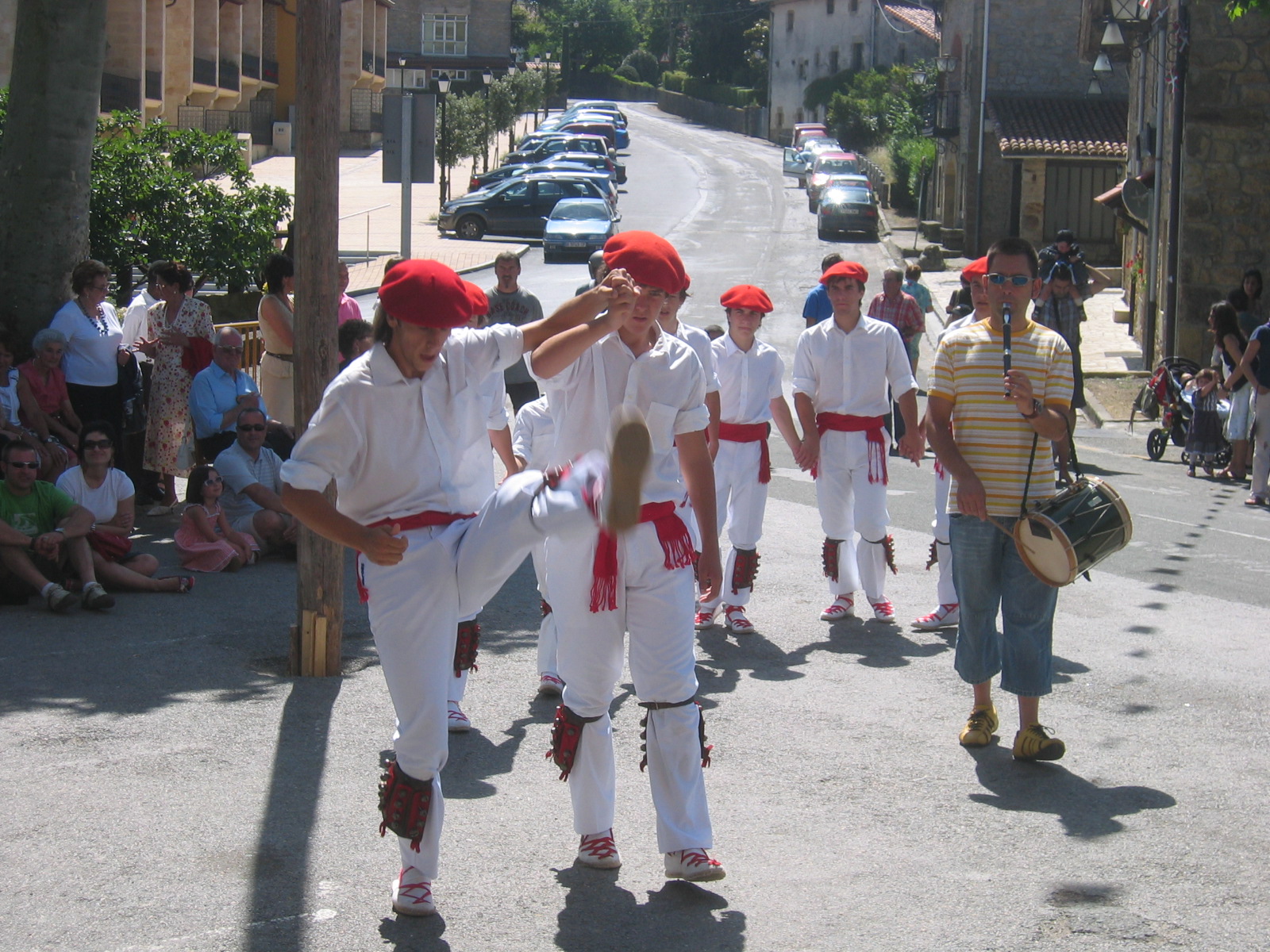
common for them to be wooden. The txistu player or txistulari, plays mostly dance music, at popular festivities
and in village squares, participating as master of ceremonies in rural areas and in religious processions and official
protocols. Nowadays, the txistu, whose tuning and technique have evolved, is taught and studied at official music schools.
For more details of Basque txistularis today go here. |
In 1336 the 'juglar' Bartolomeo in Sangüesa
may have been a pipe and tabor player. In Pamplona, the usual name
in the municipal records was juglar or jular (the roll of 1792 adds that
these are jugglers "of a drum and
flute").
They were recorded in this way until 1858. |
| 5 pipe and tabor players are recorded as playing in the Corpus Christi procession in Barcelona in the 15th century. |
Since 1515 taborers played in Azpeitia, in the province of Gipuzkoa. Here, throughout the century
taborers
are recorded as playing
for Sunday dances, Corpus Christi and San Sebastian processions,
ritual dances
and any extraordinary
occasions such as the royal visit in 1522. In 1516, the town paid ten reales
to the musicians
to go to Navarre. For the three day celebration of the coronation of Charles V as Emperor
of Germany:
"in the said three days, twenty young men went around with the said taborer with a flag, dancing
through
all the said streets."
In Hernani,(Gipuzkoa), the first documented evidence of the pipe and tabor dates back to 1531.Then the Mayor
and the Councillors ordered the sale of municipal land to pay for the taborers that were hired
for the San Juan
festivities. The town did not have its own taborers. Until 1536 Juan Sánchez de Oiartzun and his
son Martín
were regularly hired. But in 1537 they went to Rentería (Gipuzkoa) to play for the celebrations for
the safe
return
of His Majesty.
In 1543 Joanet played at the San Juan festivities for six reales and in 1545 Hareso
did so for a ducat.
In Bizkaia, province of Biscay, between 1552 and 1564 payments were made to Pedro Gorosarri, a taborer
from Berriatua, who played
in the Corpus Christi procession in the parish
of Xemein. And in 1559 when the new
peace with France
achieved by Philip II was known, to celebrate the town was ordered to place candles
in windows
and make
lights
in the streets:
"they should keep the holiday and not work and thus giving thanks, rejoice and dance and then provide
for Berriatua to play the pipe and tabor for the said Town." |
1611 during the trial of witches in Hondarribia a witch doctor named Isabel de Arano confessed that
" she had seen Inesa de Gaxen, ... playing the tambolin". |
1809 book extract:
“…The Guipuzcoans are likewise very fond of dancing ; they have a dance peculiar to themselves, called zorcicos.
The movements and steps are very lively, hurried, vigorous, and nimble, but devoid of attitude. It is danced to the
pipe and tabour….”
‘A view of Spain; comprising a descriptive itinerary, of each province, and a general statistical account of the country’
by Laborde, Alexandre Louis Joseph, comte de |
1836 dance display in Durango ; newspaper report
(extracts)
     Morning Post 26 October 1836 (England) Morning Post 26 October 1836 (England) |
1837 RECOLLECT1ONS OF A RAMBLE THROUGH THE BASQUE PROVINCES IN 1836-7. Part III.
Village Fetes and Diversions of the Basques
“…The Zorcicaa and other dances are Basque; the music
the Basque pipe and tabor, of which the harsh and monotonous
sounds end by becoming pleasing to the ear…”
Blackwood's Edinburgh Magazine |
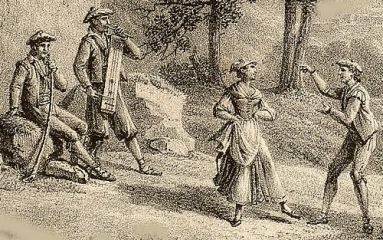
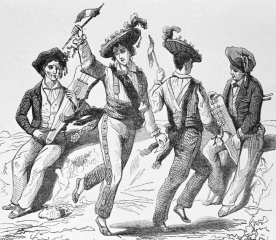
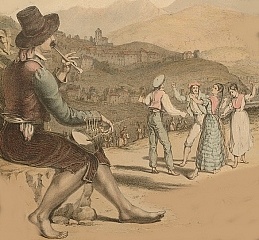 1839 illustration from 'Sketches from the basque provinces 1839 illustration from 'Sketches from the basque provinces
of Spain,
illustrative of the character and costume of the basques
and the scenery
of the northern provinces' |
1839 peace celebrations Gipuzkoa:  London Evening Standard 12 September 1839 London Evening Standard 12 September 1839 |
1841 private correspondence from San Sebastion: Evening Mail 12 November 1841, England Evening Mail 12 November 1841, England
|
1841 San Sebastian English newspaper report:  Evening Mail 12 November 1841, England Evening Mail 12 November 1841, England |
1852 English newspaper article
‘A Village Fete at Furentarabia’  Hereford Times 27 November 1852 Hereford Times 27 November 1852 |
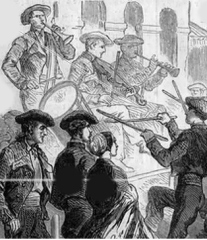 1861 French Basque, playing for 'dance of sticks 1861 French Basque, playing for 'dance of sticks' |
 1875 Hernani, Gipuzkoa 1875 Hernani, Gipuzkoa |
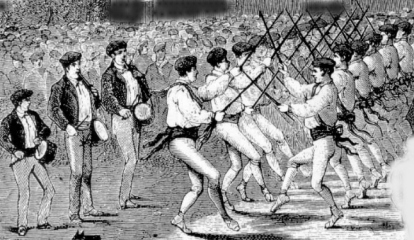 1878 'Bordon Dance of Tolosa', Gipuzkoa 1878 'Bordon Dance of Tolosa', Gipuzkoa |
|
|
 |
|
1863 English newspaper report: 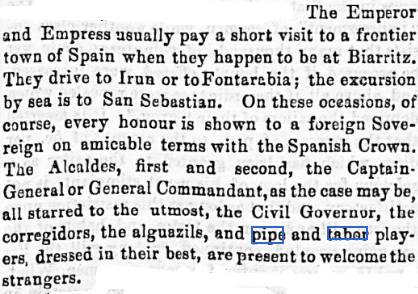 Sun (London) - Monday 19 October 1863 Sun (London) - Monday 19 October 1863 |
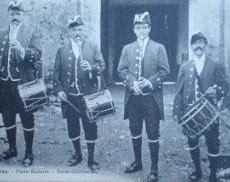
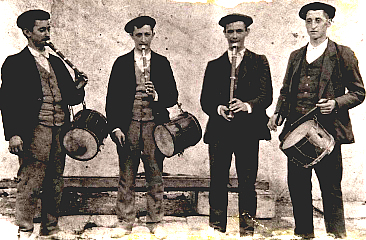 1910 Txistularis from Villabona 1910 Txistularis from Villabona |
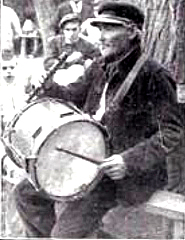 1913 Tomas Bosch 1913 Tomas Bosch |
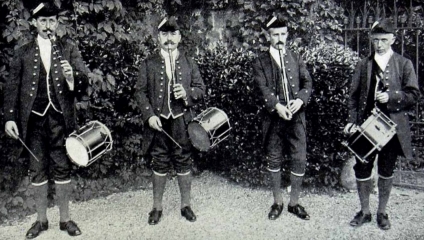
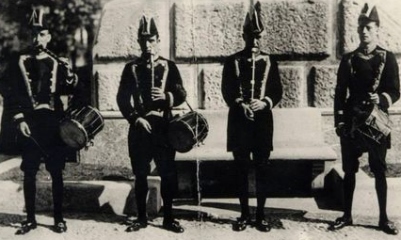
 early 20th century early 20th century |
 early 20th century photograph early 20th century photograph |
|
|
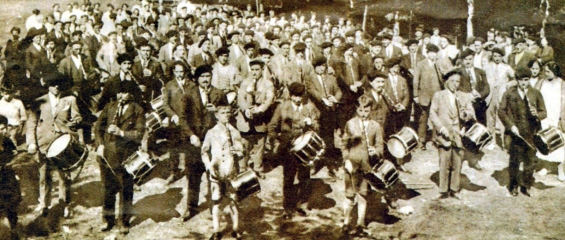 1927 first gathering of Txistularis, Arrate, Gipuzkoa 1927 first gathering of Txistularis, Arrate, Gipuzkoa |
|
|
 20th century group photograph, txistu player on extreme left 20th century group photograph, txistu player on extreme left |
|
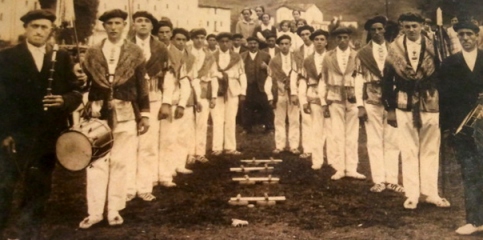 1928 Lizartza town, Gipuzkoa 1928 Lizartza town, Gipuzkoa |
 1929 magazine cover 1929 magazine cover |
|
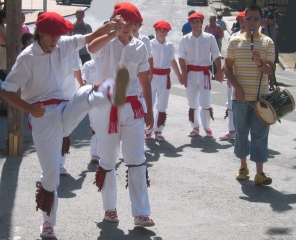
1929 folk dancers
“…The first sign of this had been the sound of a Basque pipe and tabor
issuing joyously from a motor-car
which carried six men clothed in fancy
dresses of scarlet and gold down the zigzag road leading to the station
…
The pipe and tabor and folk-dancers—for such were the gaily dressed
men in the motor—were
accompaniments of their challengers,
a team
from a Basque town….”
The Cornhill Magazine 1929-11: Vol 67 Iss 401 |
 1929 1929 |
|
|
1932 from: 'A detailed summary of the Aurresku dance tradition of the Spanish Basques and other dances.'
“The music is majestic when shrilled forth by a band of txistularis who play in three parts and roll their drums finely."
"The black-clad men of the parish process in pairs, each pair as far apart as the whole breadth of the street,
the txistularis march in the middle..."
Oxford University Press The Musical Quarterly: Volume XVIII, Issue 3, July 1932, Pages 471–482, |
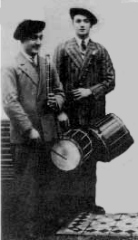 1932
Guillermo Lizaso y Lizardi 1932
Guillermo Lizaso y Lizardi
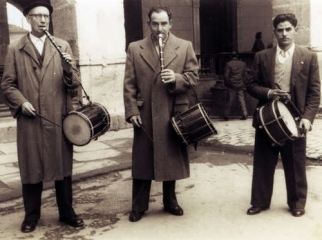
txistularis from Errenteria, Gipuzkoa |
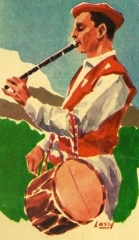
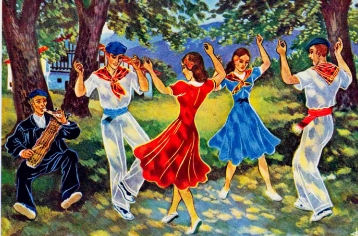
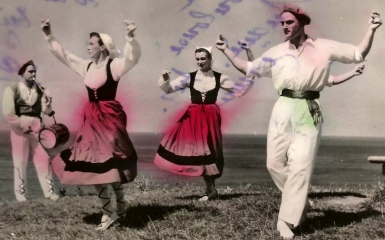 postcard, playing for folk dancing postcard, playing for folk dancing |
|
 1933 txistulari Antonio Artocha 1933 txistulari Antonio Artocha
dancer Pedro Trinidad |
 1937 soldier 1937 soldier |
 player player
|
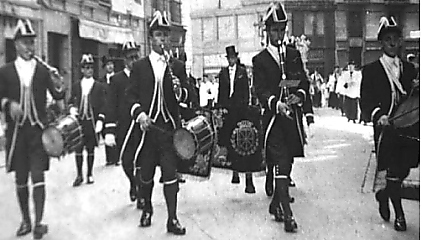
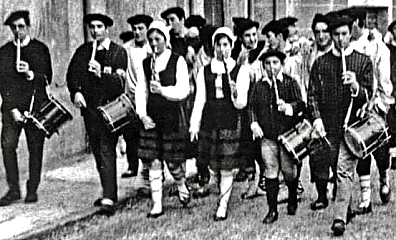 Bilbao procession Bilbao procession |
 1941 Bilbao 1941 Bilbao |
 1948 Bayonne Festival 1948 Bayonne Festival |
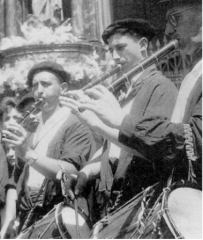 date unknown: festivities of Vitoria-Gasteiz date unknown: festivities of Vitoria-Gasteiz
Photo Gerardo López de Guereñu |
|
 playing for 'dance with small sticks' playing for 'dance with small sticks' |
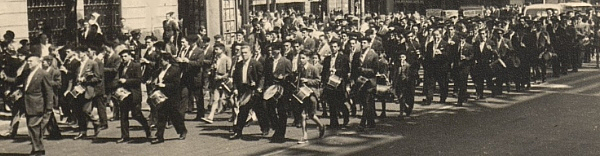 1958 procession 1958 procession |
 20th century Mutriku, Gipuzkoa, Catholic priest 20th century Mutriku, Gipuzkoa, Catholic priest |
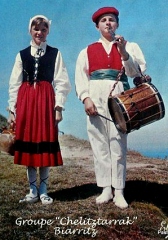
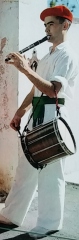 1961 postcard, France 1961 postcard, France |
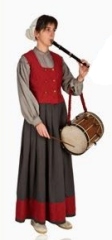 1984 France 1984 France |
|
|
“musical instruments were persecuted in the past and also more recently during the Franco era. For example in 1964 four people were fined in Sestao for blowing the pipe.
The mayor of the town forbade the use of the instrument” |
|
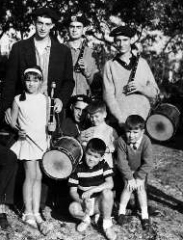 20th century Zumaia txistularis 20th century Zumaia txistularis
with local children, Gipuzkoa |
 post 1940 playing for children's dance display, Bilbao post 1940 playing for children's dance display, Bilbao |
 1986 leading a procession of dancers, fiestas de Santiago en Garay Biscay 1986 leading a procession of dancers, fiestas de Santiago en Garay Biscay |
 1989 carnival Sunday in Aretxabaleta, Gipuzkoa 1989 carnival Sunday in Aretxabaleta, Gipuzkoa |
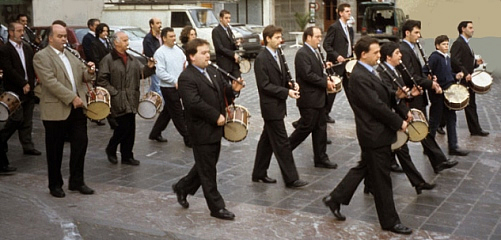 1998
Elgoibar, Gipuzkoa 1998
Elgoibar, Gipuzkoa |
|
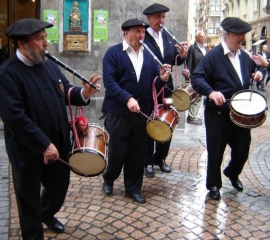
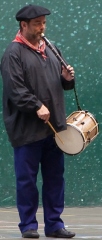 2011 Ustaritz, France 2011 Ustaritz, France |
|
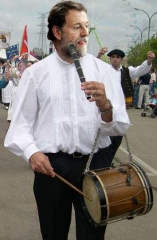 2015 2015 |
|
|
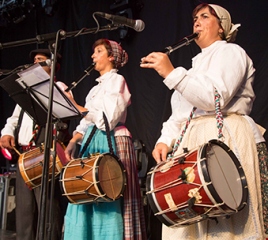 Bilbao Bilbao |
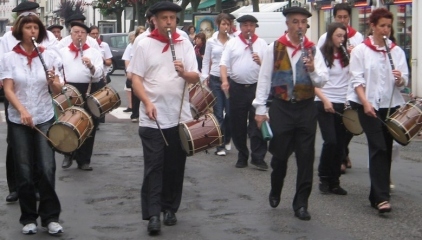 parade parade |
 21st century, Basque country 21st century, Basque country
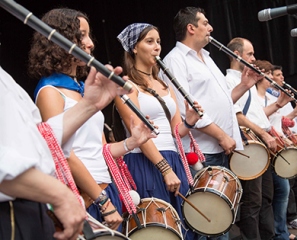
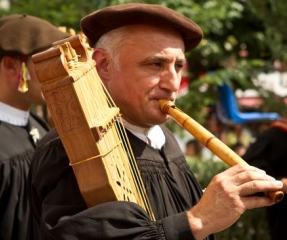
Two women txistularis. |
 2000 carnival in Santa Cruz de Campezo, Álava 2000 carnival in Santa Cruz de Campezo, Álava |
|
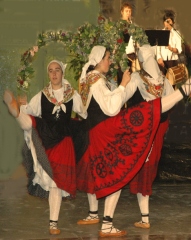 2004 dance display Elgoibar, Gipuzkoa 2004 dance display Elgoibar, Gipuzkoa |
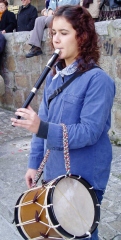 2006 2006 |
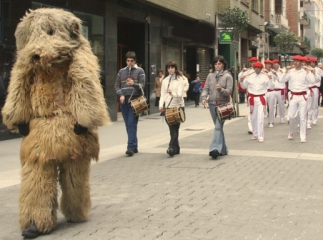 2009 procession Basauri, Bilbao 2009 procession Basauri, Bilbao |
|
 2008 sword dance display, York, England 2008 sword dance display, York, England |
 2012 sword dance in Zumarraga, Gipuzkoa 2012 sword dance in Zumarraga, Gipuzkoa |
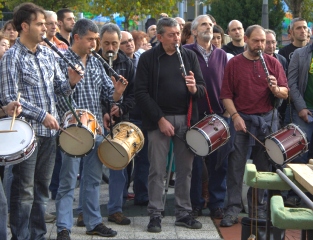 2013 musicians 2013 musicians |
|
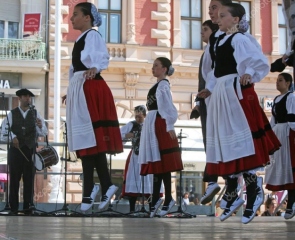 2013 playing for dance display 2013 playing for dance display |
 2013 Bermeo, Biscay 2013 Bermeo, Biscay
|
 band wearing the cardigan from Texartu Textile Studio band wearing the cardigan from Texartu Textile Studio |
|
 2014 leading the 'errebombillos' festivity in Elorrio, Biscay 2014 leading the 'errebombillos' festivity in Elorrio, Biscay |
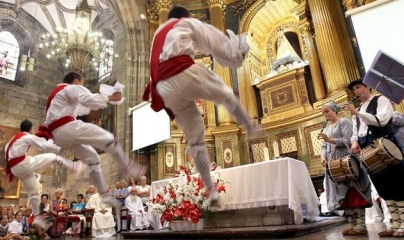 2014 religious service Bilbao 2014 religious service Bilbao |
|
|
|
 Aurresku, solo dance performed at Aurresku, solo dance performed at
weddings, tributes and public events |
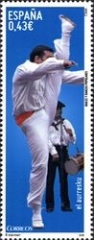 stamp stamp |
|
 dance display dance display |
|
|
 unknown Arcangues, France unknown Arcangues, France |
|
 2019 Durangaldeko Jaizaleak band 2019 Durangaldeko Jaizaleak band |
|
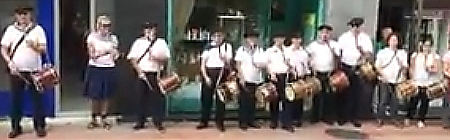 2020 street entertainment in Barakaldo, Chistularis 2020 street entertainment in Barakaldo, Chistularis |
|
|
|
|
|
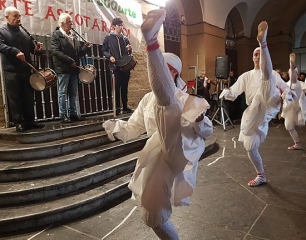 2022 Donostia San Sebastián, celebration 2022 Donostia San Sebastián, celebration |
 2023 carnival celebration, Txistulari Taldearan Parade, Mundaka 2023 carnival celebration, Txistulari Taldearan Parade, Mundaka |
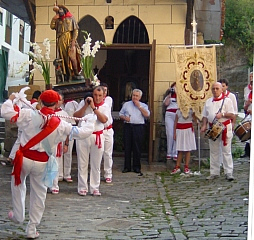 religious dance Deba,
Gipuzkoa religious dance Deba,
Gipuzkoa |
|
playing for other dances here |
|
|
|
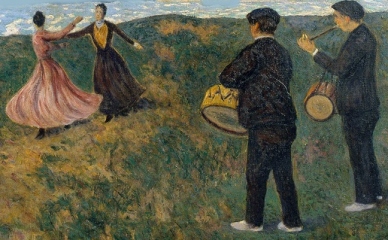

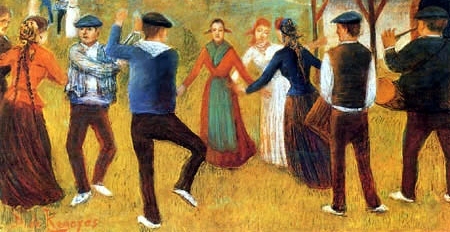


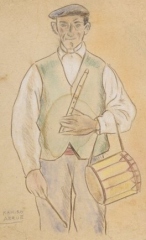
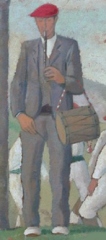
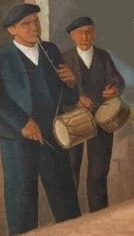
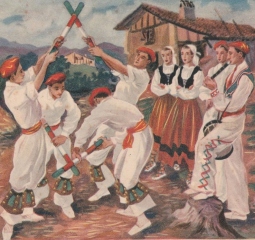


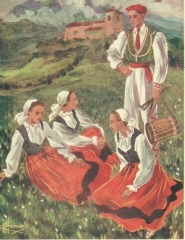

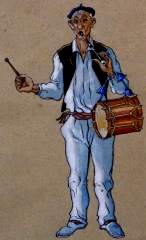
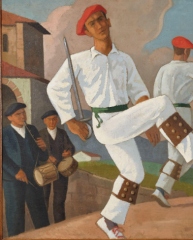
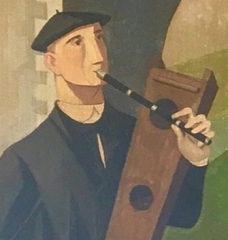
 Aurelio Arteta Y Erresti
  early 20th century player
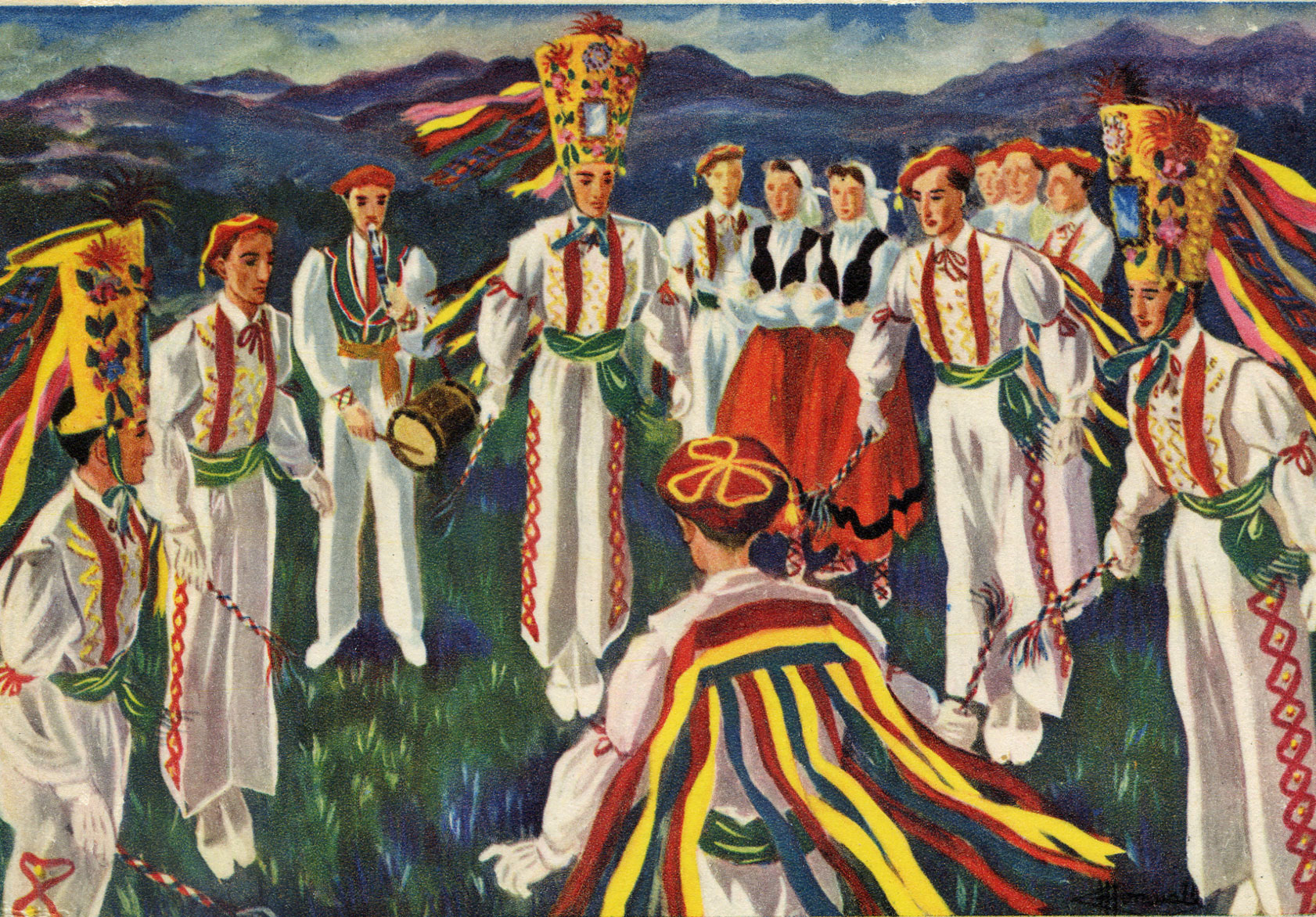
 Charles Homualk [detail]
 1956 playing for
  Charles Homualk [detail]
 Jose Arrue [detail]
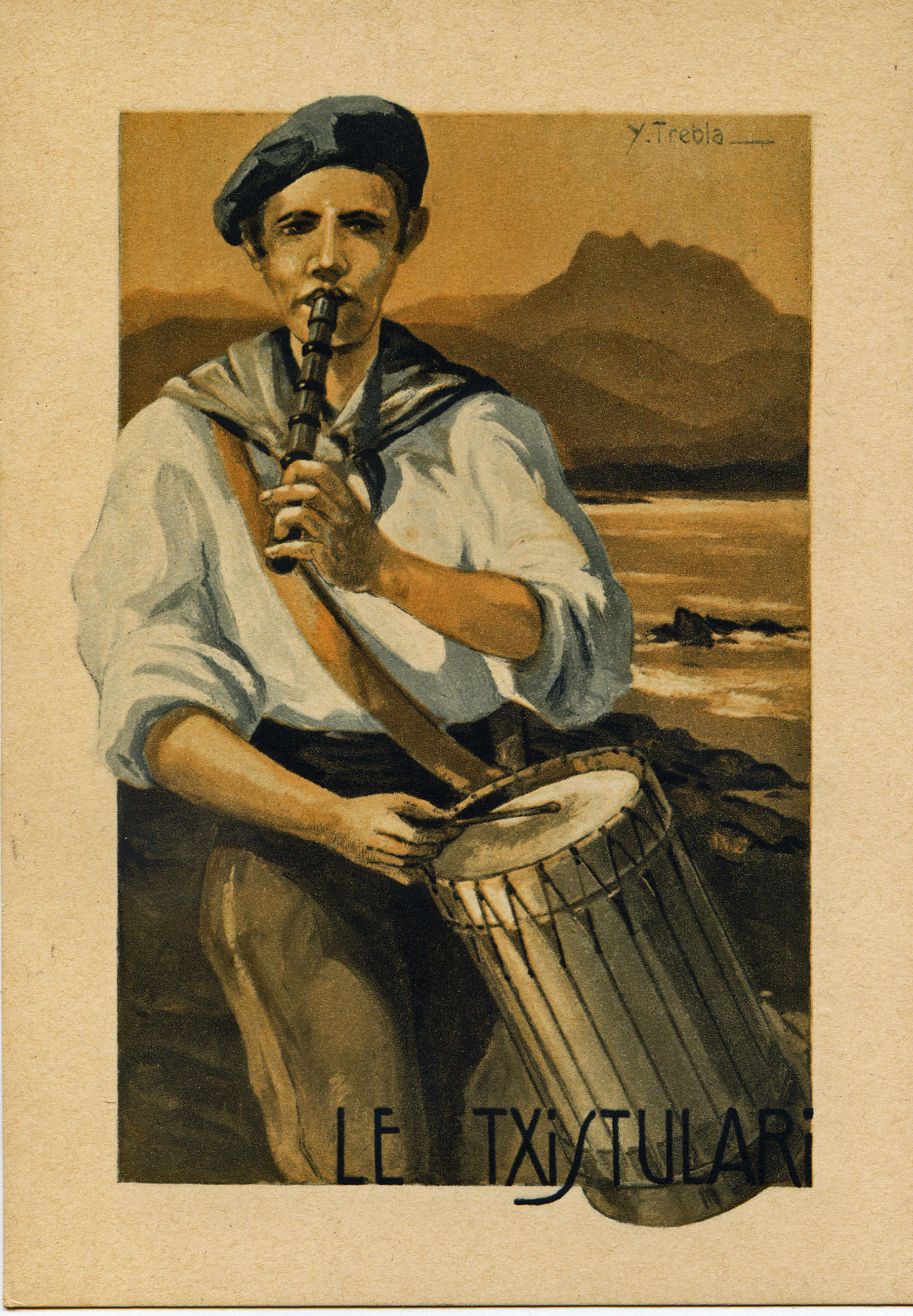
 Y Trebla
 Ramiro Arrue
 painting
 player from a postcard
 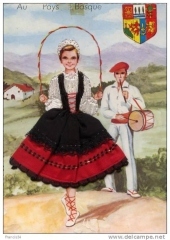 card
card playing for dancing [detail]
 playing for dancing [detail]
  1958 Oarso Renteria
 1959 card
  1964 Bilbao map, illustration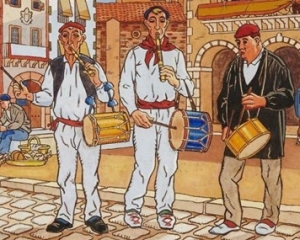
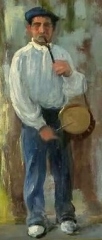

 1880
1880 
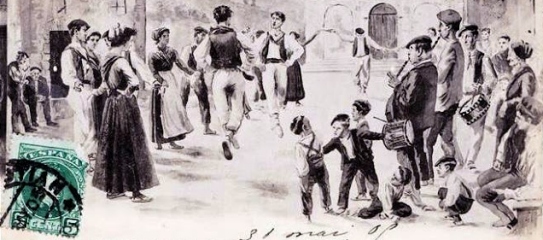
















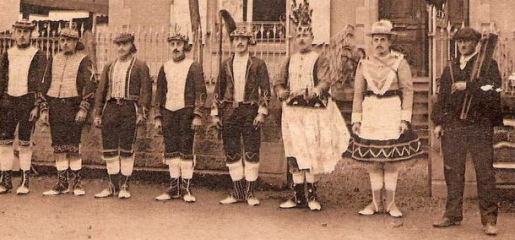
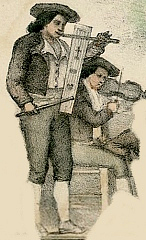

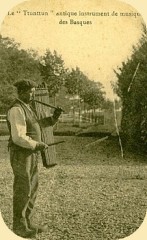
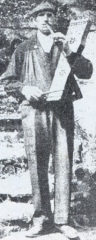
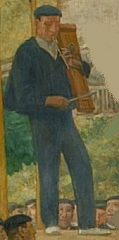 1923
1923  1931
1931 










_-_Google_Art_Project.jpg)





_2.jpg)