|
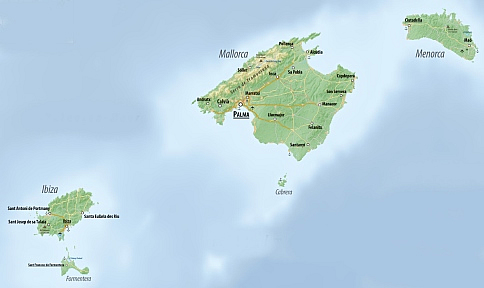
| Each one of the Balearic islands presents a remarkably different musical universe. |
| |
Formantera |
|
|
There are two styles of pipe.
The one type of fabiol is played in Mig-Jorn
and other island towns.
In design it is similar to the old Catalan keyless flabiols. It is used in religious processions
and for dances.
“Dances traditionally took place on special occasions, such as weddings; also on certain nights, in front of rural wells
and fountains…
.A pipe and tabor player, a castanet player and a third man playing the espas (struck sword)
provides the music.” |
|
 2016 religious procession in Sant Francesc Xavier 2016 religious procession in Sant Francesc Xavier |
 2018 2018 |
 festival festival |
2004 sonadors:
“Currently, of the approximately twenty-three dance groups that exist in the Pitiüses, all have at least one or two sonadors”
‘APPROACH TO THE FLUTE-DRUM ENSEMBLE OF THE PYTHIAN ISLANDS’ by Jaume Escandell, Guasch and Vicent Marí Serra, 2005, (page 57) |
| |
Minorca - faviol and tambori |
 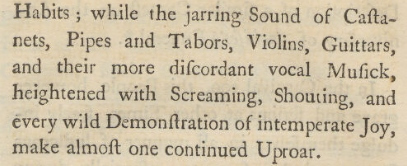 1751
‘Observations on the epidemical diseases in Minorca, from the year
1744 to 1749 : to which is prefixed, 1751
‘Observations on the epidemical diseases in Minorca, from the year
1744 to 1749 : to which is prefixed,
a short account of the climate, productions, inhabitants, and endemial distempers of that island.…’ by George Cleghorn |
"The fabiol is an important part of the culture and tradition of Minorca....various tunes
are played that have been
passed down from generation to generation". A different type of fabiol is played throughout the festival
of Sant Joan de Ciutadella.
The function of the fabioler is that of the master
of ceremonies. |
 2018 festival poster 2018 festival poster |
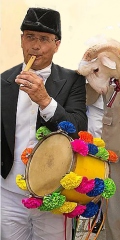 Ciutadella - the fabioler announces Ciutadella - the fabioler announces
the beginning and the end of all the fiestas
of San Joan. |
 Ciutadella - on the eve of Saint John’s Eve Ciutadella - on the eve of Saint John’s Eve
“the 'Fabioler' asks
permission at the palace
of the “Caixer enyor”,…representative
of the aristocracy, to officially begin the festivities.
This act…
symbolises the start of the celebrations
with the first sound
of the flute and drum.” |
 Ciutadella Ciutadella |
"The horse is the common protagonist of all the popular festivals that each town of Menorca celebrates during
the summer, and is the best demonstration of the authenticity of the island's customs." |
|
|
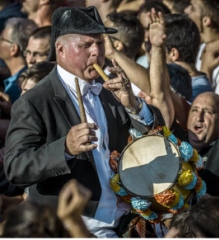 2017 on a donkey known as Somereta 2017 on a donkey known as Somereta |
 on horseback on horseback |
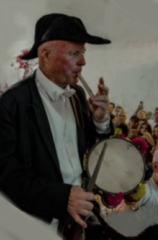 on horseback on horseback |
 2014 modern drum 2014 modern drum |
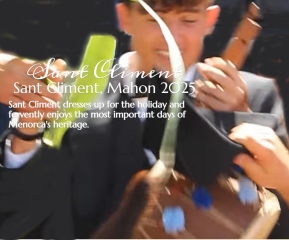 St. Climent St. Climent |
|
|
 2015 Es Castell 2015 Es Castell |
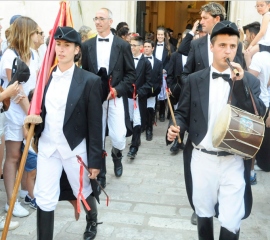 2018 leaving church, Es Castell 2018 leaving church, Es Castell |
|
The other Minorcan fabiol is played in Maó and other island towns. In design it is similar to the old Catalan
keyless flabiols. It is used in religious processions and for dances. |
Es Castell "takes pride on its Scottish dances, a symbiotic instance where stick-dancers are dressed in Scottish style,
and are accompanied by the flaviol and tambori" source source |
|
Ibiza |
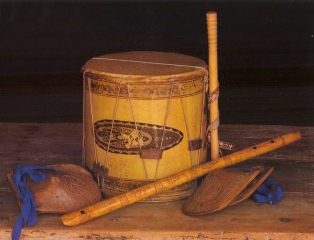
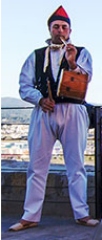
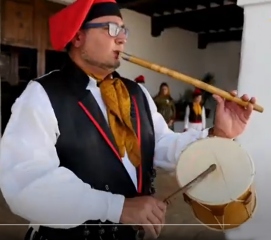
Ibiza instruments - flaüta i tambor |
|
|
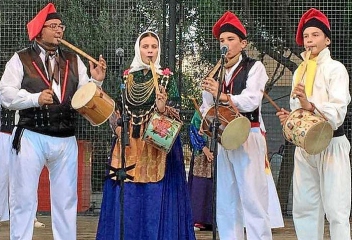
“Most popular Ibizan tunes have to do with traditional dances whose rhythm is marked by drum beats
accompanied
by three-hole pipes and castanets"
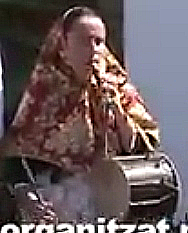
Instruments have traditionally been played by men only, except the small tabor when used to accompany singing,
in which case women play it as well. This is now changing - see here. |
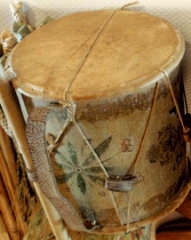
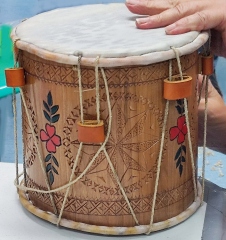
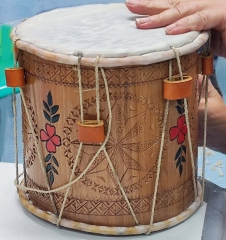
Drums are made of pine wood; the trees must be felled during the new moon of Christmas, July or August…
The membranes are goatskin, lamb or rabbit, round in shape
and sewn to the wood…. .” |
|
|
| Ibiza pipes (flaüta) |
|
|
|
The pipes are made of oak. Similar pipes are used on Formentera and the other
Pityusic Islands. |
“All the beak part and the bezel (here called the moon) are usually metal so it will not deteriorate too much.
In the past they used metal extracted from the mines of s'Argentera in Sant Carles, on the island of Ibiza,
and that was lead with one small amount of silver.
The whole flute is decorated, i.e. engraved by knife incision,
representing geometric motifs, shapes vegetables, fish….
Tuning, this concept is unknown to the peasantry, so it is variable”
‘FLUTE AND DRUM FROM EVISSA AND FORMENTERA’ by Vicent Marí Palermet |
| |
Ibiza players (sonador) |
|
 20th century, Sant Antoni de Portmany 20th century, Sant Antoni de Portmany |
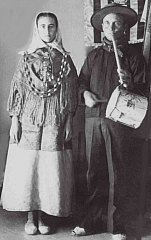 20th century, page 167 20th century, page 167 |
 source source |
|
|
|
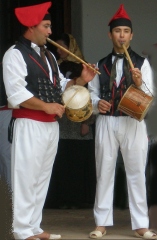 2008 entertaining tourists in San Miguel 2008 entertaining tourists in San Miguel |
 |
|
|
|
 page 19 page 19 |
|
|
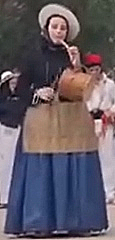 see here for more details of women taborers see here for more details of women taborers |
|
|
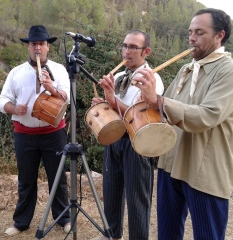 source source |
|
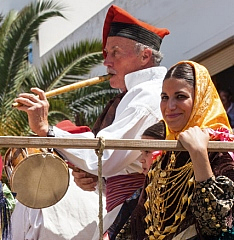
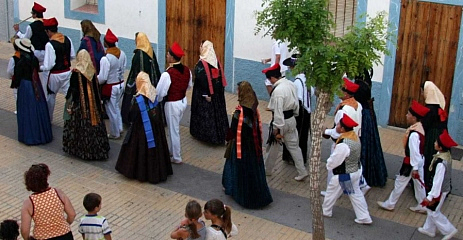 leading a procession leading a procession |
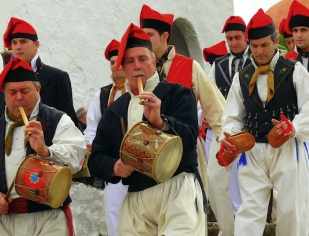 2021 procession 2021 procession |
|
|
|
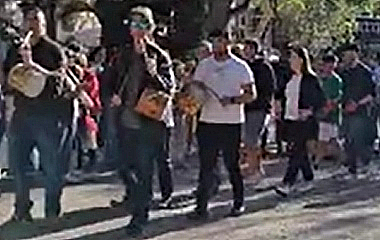 2024 parade in Passeig de s'Alamera de Vila 2024 parade in Passeig de s'Alamera de Vila |
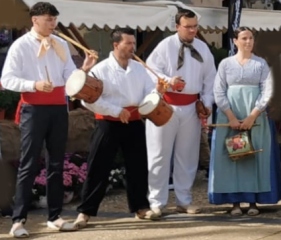 2024 men and woman players 2024 men and woman players |
|
|
 string drum and harmonica string drum and harmonica |
|
|
| |
|
playing for dancing |
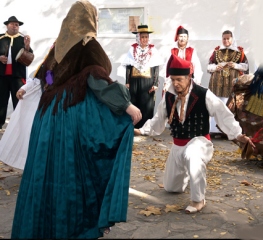
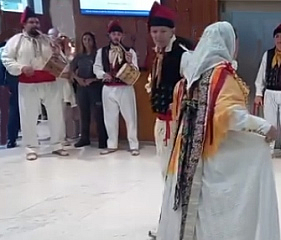
“Dances traditionally took place on various occasions, including weddings; or on certain nights, in front of rural wells
and fountains. There is basically one traditional dance type, which appears to be a very old form. It has two main
subdivisions known as La Llarga, and La Curta, and wedding variations. A pipe and tabor player, a castanet
player and a third man playing the espas, (struck sword), provide the music. Pipe and tabor playing for La Curta here. |
|
|
|
 |
 children dancing to pipe and tabor children dancing to pipe and tabor |
|
|
|
 source source |
 dancing at Sant Miquel church dancing at Sant Miquel church
|
|
|
|
|
|
|
|
 2024 sonador and sword player 2024 sonador and sword player |
|
|
|
| |
playing for religious occasions |
| "The pipe and tabor, with castanets and espas, struck sword, form part of the liturgy for certain Masses, especially Christmas." |
 2007 "caramelles" are the oldest examples 2007 "caramelles" are the oldest examples
of religious traditional music; playing in church |
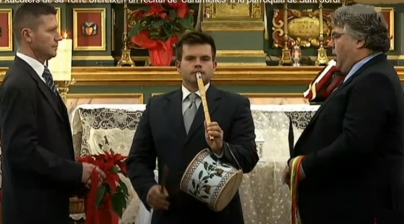 Christmas service Christmas service
|
 2021 religious service 2021 religious service |
 2024 inside church 2024 inside church
|
 sword player (espas) sword player (espas)
|
|
|
|
parade commemorating the miracle of the Vella church in Santa Eulària des Riu |
|
|
| |
|
|
 2024 parading into church 2024 parading into church |
 2023 parading into church 2023 parading into church |
|
|
|
|
| |
|
|
| |
|