|
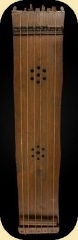
The string drum goes by many names according to the region of Europe. It is known as Tamborin in Gascony
and
Tambourin de Bearn in Laruns.
|
| In the 14th and 15th centuries the string drum, known as a chorus, was played without a pipe. |
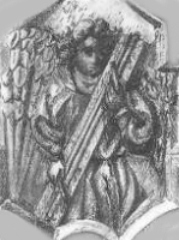 late 14th century angel on the back of a chair late 14th century angel on the back of a chair
belonging to one of the officiants
at the Chartreuse de Champmol,
Dijon,
Burgundy |
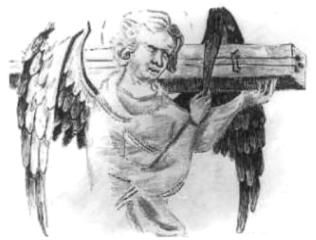 1382 angel, sketch from the Apocalypse Tapestry, Maine-et-Loire 1382 angel, sketch from the Apocalypse Tapestry, Maine-et-Loire |
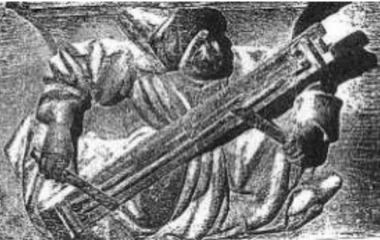 15th century misericord, Rouen Cathedral, Normandy [now disappeared] 15th century misericord, Rouen Cathedral, Normandy [now disappeared] |
|
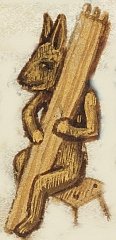 1450-60 manuscript,
Poitiers 1450-60 manuscript,
Poitiers |
14th century poem' La Vieille':
“...The cymbal, when pushed, makes a great noise
And the chorus of a great boisterous sound
When the string is beaten on it... ”
by Jean Lefèvre (1320-1380), quoted in ‘Essay on the origins of the psalter’by Gastellu Etchegorry, Marcel, 2021 |
The string drum seems to have had an unsavoury reputation during the 16th century.
1567 ‘Poesias gasconas’, a poem by Gascon Pey de Garros evokes a sabbath with dances
accompanied by flute and tambourine.”
original poem here
from ' L’iconographie de la flûte à trois trous et du tambourin à cordes à l’époque de la Renaissance' by Marcel GASTELLU-ETCHEGORRY |
1609 an account of the witch trials in Labourd (Pyrénées-Atlantiques, in the Aquitaine):
the witches danced sometimes to the sound of a long instrument, which the musicians
“placed on the collar, and stretching down to the belt; they beat it with a small stick.....”
'Some Notes on the Pyrenean Stringed Drum’ by V. Alford, page 568 |
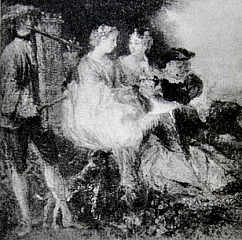
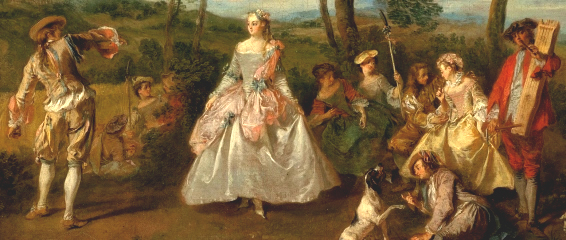
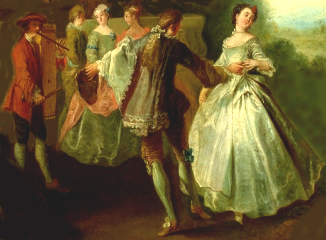
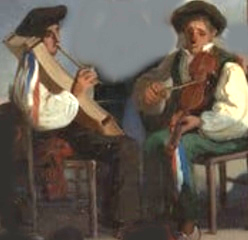
In the 18th century it became fashionable for the aristocracy to pretend to be peasants. Meanwhile in villages
in the Pyrenees
working class
agricultural men continued to play their traditional music with, and dancing to, the string drum. |
|
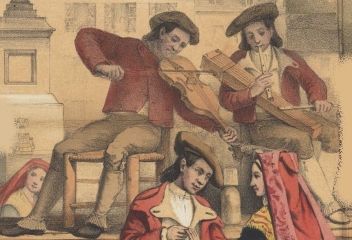
 1734 playing for dancing 1734 playing for dancing |
 |
|
|
|
|
Some 18th century sales of string drums in Paris:
1758, January 25, Louis GUERSAN, "Two stringed tambourines," 12 livres each
1760, February 15, Jean-Nicolas LAMBERT, "Four stringed tambourines," 27 livres together.
1764, February 16, a stringed tambourine, with two sides that can be set to two different tones.
1772, March 26, Widow of Pierre LOUVET, "Two tambourines, one with skin, valued at six livres and the other with string,
valued at one livre ten sols."
1787, January 12, Joseph GAFFINO, "Four tambourines, two with strings and two with sticks," 4 livres "
‘Tambours-bourdons en France au XVIIIe siècle’ by Florence Gétreau 2005 pages 79, 84 |
1788 letter from a traveller who passed through Bagnères-de-Bigorre, Hautes-Pyrénées Department in the Occitanie:
“We observed, in the cloister of the Jacobins, and among the singular sculptures whose Gothic capitals on the columns
of this cloister are overloaded, the figure of a minstrel playing the three-stringed drum, almost as it is still in use.”
The capitals of the Jacobin cloister have since disappeared.
'Fragments of a sentimental and picturesque journey in the Pyrenees or Letter written from these mountains (text followed by) The bouquet
of the Pyrenees or Catalog of plants observed in these mountains, during the months of July and August of the year 1788, arranged according
to the sexual system." by BOUDON de SAINT-AMANS (Jean-Florimond de). |
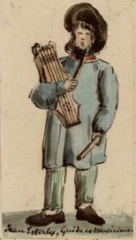
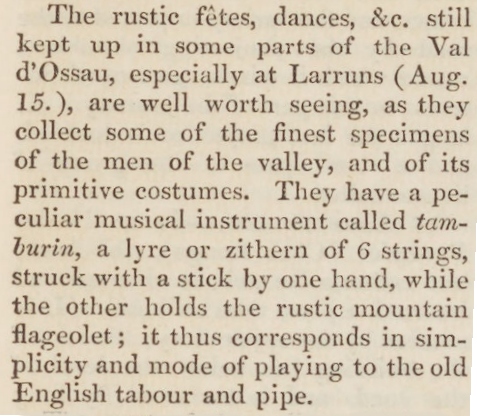 1844 ‘Hand-book for travellers in France : being a guide to Normandy, Brittany, the rivers Loire, 1844 ‘Hand-book for travellers in France : being a guide to Normandy, Brittany, the rivers Loire,
Seine, Rhone
and Garonne, the French Alps, Dauphiné, Provence and the Pyrenees’ |
|
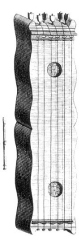
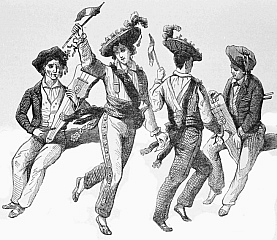 1845 Basque string drum 1845 Basque string drum |
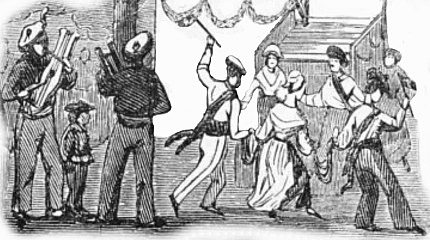 1845 Basque string drum 1845 Basque string drum |
|
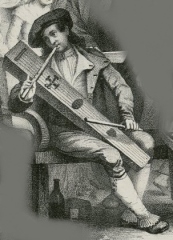
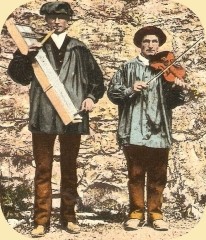
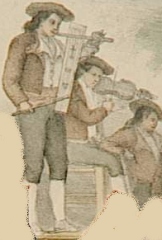 19th century playing for dancing 19th century playing for dancing
at Eaux-Bonnes and Laruns |
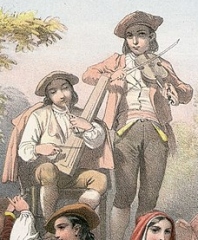 1856 playing for dancing 1856 playing for dancing |
|
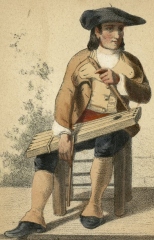 19th century Eaux Bonnes 19th century Eaux Bonnes
Pyrénées-Atlantiques
|
|
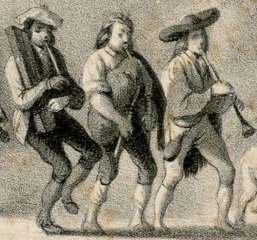 1849 band leading a procession back from harvesting 1849 band leading a procession back from harvesting |
1893 letter written in
Lencouacq a commune in the Landes department in Nouvelle-Aquitaine:
“the tympanon or tambourine, (...), I saw and heard it leading not only newlyweds to church, but also little children to baptism. Today this old-fashioned instrument seems reserved for the parade of fat oxen during carnival...". |
|
|
|
|
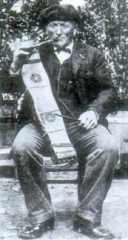 1900 1900
postcard - Hubert Boone |
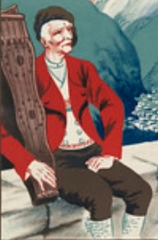 1930 poster advertising the train 1930 poster advertising the train
Eaux-Bonnes |
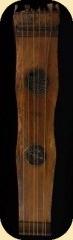 France France |
 more
French more
French
string
drums here |
|
1934 French Pyrénées, (Pyrénées-Atlantiques):
“their musician marches ahead, thwacking his long, wooden, stringed drum, piping his three- holed pipe. These
somewhat archaic instruments are used on both sides of the Pyrenees, notably in the Val d’Ossau and in the Basque
Soule. Here, on this southern slope, the drum is known as the chicotdn. An old, heavy, iron key is used for tuning
the six strings, while the pipe shows a covering of snake skin which prevents the joints parting.”
‘Santa Orosia: a Thaumaturgic Saint’ by Violet Alford in Antiquity / Volume 8 / Issue 31 / September 1934 |
|
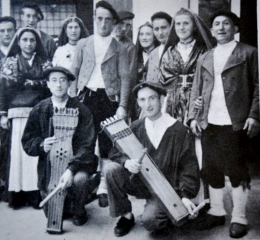 1948 Angeles-sur-Mer 1948 Angeles-sur-Mer |
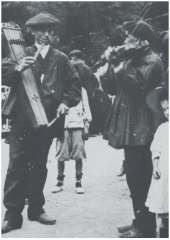 20th century 20th century |
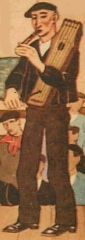 1947 postcard,
painting [detail] 1947 postcard,
painting [detail] |
|
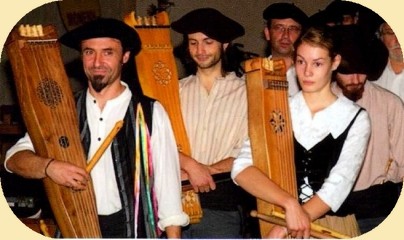 2007 Monein, SW France 2007 Monein, SW France |
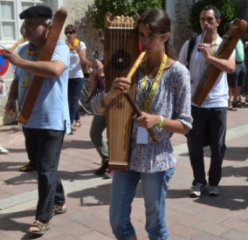 21st century Pau 21st century Pau |
 2013 Pau 2013 Pau
|
 2013 Laas, Pyrénées-Atlantiques 2013 Laas, Pyrénées-Atlantiques |
|
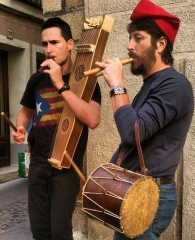
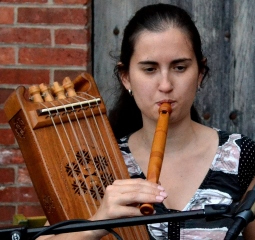 2016 flabuta and tom tom, Gascony
Par Unuaiga — Travail personnel, CC BY-SA 4.0 2016 flabuta and tom tom, Gascony
Par Unuaiga — Travail personnel, CC BY-SA 4.0 |
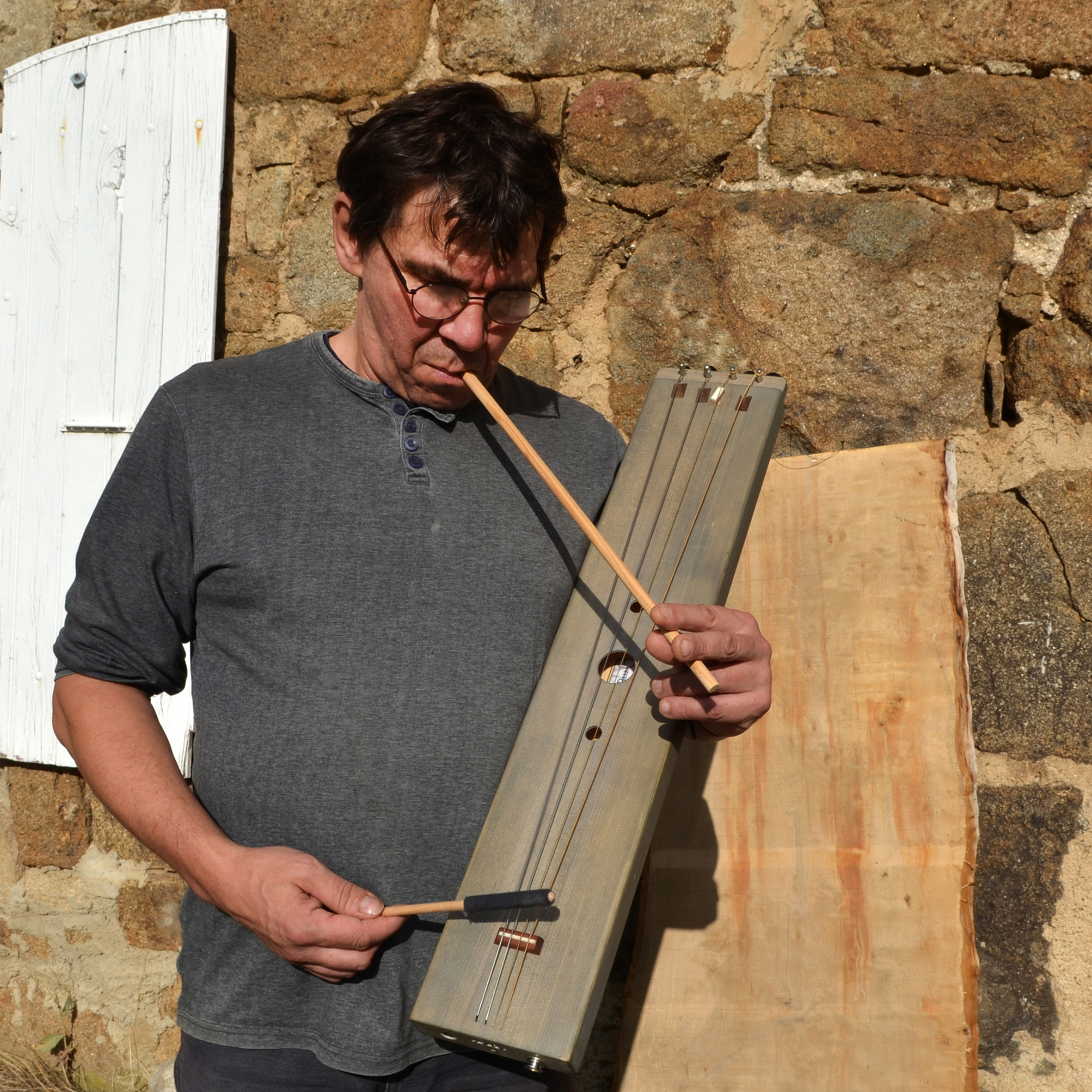
 2019 electric string drum 2019 electric string drum |
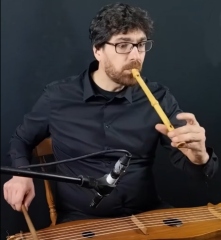 2024 Benjamin Melia, Provence 2024 Benjamin Melia, Provence |
|
 Aquitaine Aquitaine |
 2024 procession after church mass, Laruns 2024 procession after church mass, Laruns, Béarn Pyrenees
video here 2022 video here |
 2025 tambourin player with the folklore group 2025 tambourin player with the folklore group
The Shepherdesses of Campan, Occitanie |
|
21st century, in Soule, (Pyrénées-Atlantiques department), the xirula/ttun-ttun duo remains the obligatory accompaniment
for masquerades and pastoral plays.
The stringed drum is still traditionally played during patronal festivals to encourage dancing or to accompany processions,
but it is also used in various contemporary musical groups, ranging in genre from medieval music to experimental music
and traditional Provençal music.
In its traditional use, it is tuned to the accompanying pipe: one half of the strings, more or less, produces the tonic
while the others are tuned to the fifth. |
|
|